
Views: 0 Author: Site Editor Publish Time: 2026-07-13 Origin: Site


The traditional agricultural calendar restricts revenue and yield to a narrow seasonal window, forcing growers to halt production or rely on imported goods during off-seasons. Extending the growing season through deep winter and peak summer requires balancing the operational demands of climate control against the market value of the crops produced. Transitioning from seasonal high tunnels to a permanent, climate-controlled glass greenhouse shifts the operational focus from basic crop survival to predictable, scalable year-round production. You move away from hoping the frost holds off, to dictating exact harvest dates based on buyer demand. This guide breaks down viable year-round crop categories, infrastructure requirements, and the financial trade-offs of continuous cultivation. We will look at how to manage root zone temperatures, handle vapor pressure deficits, and select the right crops for your specific hardiness zone to ensure your operation remains productive 365 days a year.
Year-round production requires aligning crop selection with your specific climate control capabilities and USDA Hardiness Zone; not all crops are profitable to heat through deep winter.
A well-designed glass greenhouse maximizes natural light transmission, reducing supplemental lighting costs during short winter days compared to poly-carbonate alternatives.
Commercial viability depends on rotating cool-weather crops (brassicas, leafy greens, root vegetables) with heat-loving varieties (tomatoes, peppers) or investing in heavy environmental controls for monocropping.
Evaluating infrastructure—such as thermal screens, elevated beds for root warmth, automated venting, and HVAC—is as critical as seed selection for mitigating winter humidity and summer heat stress.
To grow crops year-round, a structure must provide maximum photosynthetically active radiation (PAR) during low-light winter months while maintaining a highly stable internal climate. Winter cultivation presents a dual challenge. You must capture as much natural sunlight as possible while preventing that captured heat from escaping when temperatures drop at night. Summer cultivation reverses this dynamic, requiring rapid heat dissipation and shading to prevent crop stress. Relying on basic hoop houses with single-layer poly film simply will not hold up to the thermal demands of a 365-day operation.
Glass offers superior clarity and longevity compared to polyethylene films or polycarbonate panels. It allows for tight environmental sealing. This tight seal dictates precise HVAC operation and humidity control. When a structure leaks air, heating systems work overtime, and humidity levels fluctuate wildly, creating breeding grounds for pathogens. Modern horticultural glass often features anti-reflective coatings and diffuse textures that scatter light deep into the plant canopy, preventing the upper leaves from shading out the lower fruit clusters.
Evaluating your infrastructure requires looking at three primary dimensions: light transmission, thermal efficiency, and structural load capacity. Clear horticultural glass allows up to 90% or more of available light to penetrate the canopy. Every percentage point of light loss translates directly to a percentage point of yield loss in light-hungry crops. Thermal efficiency dictates your heating requirements. Single-pane glass offers maximum light but poor insulation. Growers often pair single-pane glass with automated thermal curtains to retain nighttime heat without sacrificing daytime light. Structural load capacity ensures the frame can support the heavy weight of glass alongside local snow and wind compliance standards.
Comparison of Greenhouse Glazing Materials for Year-Round Growing | ||||
Glazing Material | Light Transmission (PAR) | Insulation Value (R-Value) | Lifespan | Best Application |
|---|---|---|---|---|
Single-Pane Glass | 90% - 93% | 0.95 | 30+ Years | High-light winter crops, requires thermal screens |
Double-Pane Glass | 75% - 80% | 1.50 - 2.00 | 30+ Years | Deep winter growing in Zone 4 or colder |
Twin-Wall Polycarbonate | 80% - 82% | 1.60 | 10 - 15 Years | Impact resistance, moderate insulation needs |
Double Poly Film (Inflated) | 70% - 75% | 1.50 | 3 - 5 Years | Low-budget seasonal extension |
Before breaking ground on a permanent structure, growers must execute a thorough site evaluation to ensure the facility can handle year-round demands. Failing to account for local weather extremes will result in structural failure or insurmountable heating bills.
Calculate the maximum historical snow load for your specific county to determine the required aluminum extrusion thickness for the roof bows.
Assess the prevailing winter wind direction to position the greenhouse for minimal wind shear and optimal natural ventilation during the summer.
Audit the local water supply for alkalinity and heavy metals, as year-round fertigation requires a massive, consistent volume of clean water.
Determine the distance to the nearest natural gas line or three-phase power drop, as running new utilities over long distances will drastically inflate the initial build cost.
Operating a Commercial Vegetable Glass Greenhouse demands a strategic crop rotation schedule. You must align plant physiology with seasonal realities to maximize margins and minimize heating expenses. Forcing summer crops in the dead of winter without the proper budget for supplemental lighting and boiler heating will bankrupt an operation quickly.
Cool-season baseline crops form the foundation of low-energy winter production. Cold-tolerant vegetables like arugula, kale, spinach, carrots, beets, radishes, and broccoli require minimal supplemental heating. These crops thrive in ambient temperatures between 45°F and 65°F. Instead of heating the entire air volume to summer temperatures, you only need to keep the environment above freezing. Progressive harvesting techniques allow for continuous winter cash flow. By planting in staggered successions every two weeks, you can harvest mature leaves or roots weekly, ensuring a steady supply for winter wholesale accounts.
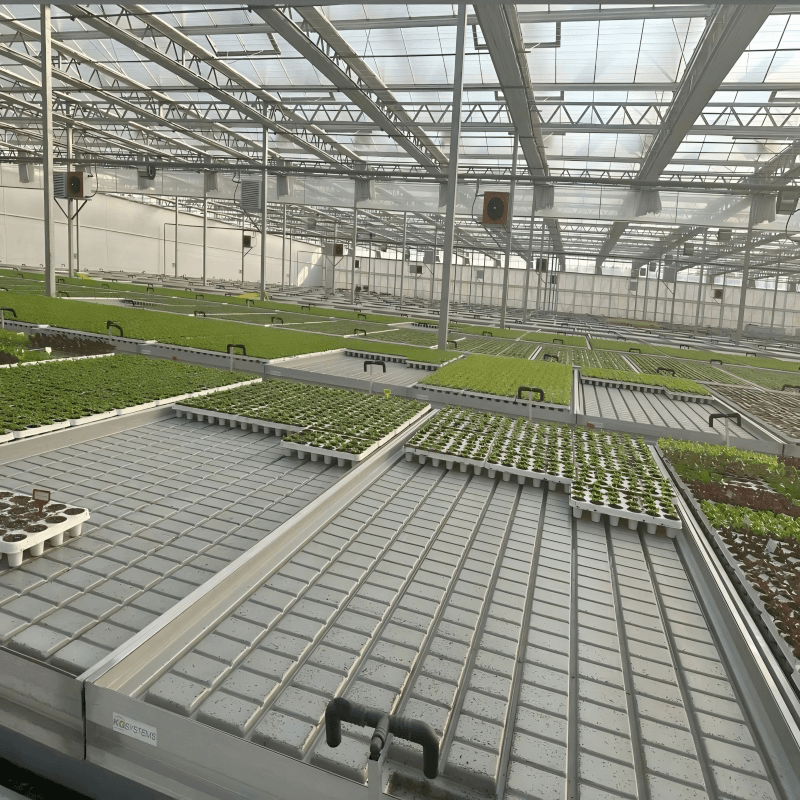
Root zone temperature management is often more impactful than ambient air temperature for winter vegetables. Utilizing elevated beds or raised planters insulates the soil from the frozen ground. Elevated beds maintain higher root zone temperatures compared to ground-level planting. When roots stay warm, nutrient uptake continues efficiently even if the air temperature dips into the low 40s. Commercial operations integrate hydronic heating tubes directly into the soil or under the benches. Pumping 100°F water through these closed-loop PEX tubes delivers targeted heat exactly where the plant needs it most, allowing growers to lower the ambient air thermostat and save thousands on fuel.
As daylight increases and the threat of frost passes, operations transition to heat-loving summer staples. High-margin fruiting crops like tomatoes, cucumbers, and bell peppers dominate the shoulder seasons and summer. These crops require rigorous management of the vapor pressure deficit (VPD). VPD measures the difference between the amount of moisture in the air and how much moisture the air can hold when saturated. Proper VPD ensures plants transpire at optimal rates, drawing water and calcium up through the roots. Poor VPD management in an enclosed environment leads directly to physiological disorders like blossom end rot in tomatoes or tip burn in lettuce. Growers target a VPD between 0.8 and 1.2 kPa for optimal vegetative growth and fruit set.
Heating a tightly sealed vegetable environment during cold weather carries implementation risks. Warm air holds more moisture than cold air. When warm, humid air inside meets the cold glass ceiling, condensation forms. This condensation drips back onto the plant canopy. Wet foliage combined with warm temperatures creates the perfect vector for fungal pathogens, particularly Botrytis (gray mold) and powdery mildew. Managing this requires active dehumidification, horizontal airflow (HAF) fans to keep the microclimate around the leaves moving, and precise rack-and-pinion venting strategies to purge humid air without losing excessive heat.
Floral production requires exact timing. Missing a holiday window by even a few days renders a crop worthless. A Commercial Floriculture Glass Greenhouse provides the environmental precision necessary to force blooms on strict, predictable schedules. The floral market does not tolerate blemishes, meaning pest control and climate stability must be absolute.
Holiday and seasonal ornamentals drive significant revenue. Poinsettias, cyclamens, and amaryllis must peak exactly during the winter holiday demand window. This requires intense photoperiod management. Poinsettias, for example, are short-day plants. They require long, uninterrupted periods of darkness to initiate bract coloring. Growers use automated blackout curtains with motorized leading edges and light traps to simulate long nights, regardless of external daylight hours. Conversely, supplemental lighting extends the day length to keep plants in a vegetative state until the exact moment bloom initiation is required.
Photoperiod Management for Common Greenhouse Floriculture | |||
Crop | Target Market | Photoperiod Requirement for Blooming | Temperature Target (Night) |
|---|---|---|---|
Poinsettia | Christmas | Short Day (14+ hours of darkness) | 60°F - 65°F |
Easter Lily | Spring/Easter | Long Day (Requires vernalization first) | 55°F - 60°F |
Chrysanthemum | Fall/Thanksgiving | Short Day (12+ hours of darkness) | 60°F - 62°F |
Cut Roses | Year-Round/Valentine's | Day Neutral (Requires high DLI) | 62°F - 64°F |
Continuous cut flower production allows growers to cultivate high-value crops like roses, lilies, and tulips regardless of external frost dates. Roses require high light levels and strict temperature controls to produce long, straight stems and large flower heads. Tulips can be forced into early spring blooms by manipulating chilling hours in coolers before moving them onto heated greenhouse benches. This forces the bulb to push a flower stalk months before it would naturally emerge outdoors.
Intensive floral production brings scalability and compliance challenges. High-density floral crops require frequent watering and heavy fertilization. This intensive fertigation generates runoff containing high concentrations of nitrogen and phosphorus. Adhering to agricultural runoff regulations is mandatory in most municipalities. Closed-loop irrigation systems capture the leachate from the pots, run it through UV sterilizers or ozone generators to kill waterborne pathogens, re-dose it with nutrients based on real-time EC (electrical conductivity) sensors, and recirculate it back to the crop. This prevents groundwater contamination and drastically reduces overall fertilizer consumption.
Fruit production in controlled environments is expanding rapidly as field growers face unpredictable weather patterns and labor shortages. A Fruit And Berry Glass Greenhouse allows growers to capture premium prices for out-of-season produce, delivering high-brix fruit to local markets when imports are the only other option.
Cold-tolerant and day-neutral strawberries offer excellent year-round potential. Utilizing elevated gutter systems keeps the fruit off the ground, reducing disease pressure and dramatically improving harvest ergonomics. Workers can pick fruit standing up, increasing harvest speed and reducing labor fatigue. Elevated gutters allow for early spring harvests and continuous yields through the winter. Selecting day-neutral varieties like Albion or Seascape is mandatory. Unlike June-bearing varieties that rely on specific day lengths to trigger flowering, day-neutral strawberries produce fruit continuously as long as temperatures remain favorable and nutrient delivery is consistent.
Dwarf citrus and specialty fruits provide niche market opportunities. Lemons, limes, and figs can thrive indoors if baseline temperatures are maintained through deep winter. Citrus requires bright light, excellent drainage, and a coarse substrate mix to prevent root rot. Growers must evaluate the long-term return on investment of slow-maturing fruit trees against the physical footprint they occupy. A lemon tree takes up significant square footage for several years before reaching peak production, whereas strawberries offer a rapid turnaround and immediate cash flow.
Pollination logistics present a unique hurdle. A sealed glass structure blocks natural pollinators like wind and native bees. Addressing this lack of natural pollination is critical for fruiting crops. Growers introduce commercial bumblebee hives directly into the structure. Bumblebees (Bombus impatiens) are highly efficient at pollinating greenhouse crops and perform well in enclosed spaces. They work in cooler temperatures than honeybees and utilize "buzz pollination," which is highly effective for tomato and strawberry flowers.
Place commercial bumblebee hives on elevated platforms to protect them from irrigation runoff and ground-dwelling pests.
Position the hives in shaded areas of the greenhouse to prevent the colony from overheating during peak afternoon sun.
Monitor flight activity daily; a healthy hive will have constant traffic in and out of the entrance door during daylight hours.
Close the hive doors before applying any necessary foliar sprays or biological controls to prevent colony collapse.
Replace hives every 6 to 8 weeks, as commercial greenhouse colonies have a limited lifespan and will naturally decline in pollination efficiency.
Propagation is the most sensitive phase of plant growth. A seed contains all the genetic potential of the plant, but unlocking that potential requires exact moisture, temperature, and light. A Nursery And Seeding Glass Greenhouse provides the exact conditions needed to turn dormant seeds into vigorous transplants ready for field production.
Seedling propagation relies on controlled environments to start spring vegetable and flower seedlings weeks, or even months, ahead of the last frost. This early start guarantees that transplants are ready for field planting the moment weather permits, giving growers a massive head start on the outdoor season. Moving plants from a perfect indoor climate to the harsh outdoors requires strict hardening off protocols. Gradually exposing seedlings to cooler temperatures, increased air movement via high-velocity fans, and direct sunlight thickens their cuticles and reduces transplant shock. Skipping the hardening off phase will result in wind-whipped, sunburned plants that stunt immediately upon field planting.
Fast-turnaround crops maximize space utilization. Integrating microgreens and baby leaf production on vertical benches allows growers to maximize cubic volume while waiting for main-season crops to mature. Microgreens have a crop cycle of just 10 to 14 days from seeding to harvest. They require minimal light compared to mature fruiting crops, making them ideal for stacked, multi-tier benching systems equipped with low-wattage LED strip lights. This vertical approach turns empty airspace into revenue-generating square footage.
Connecting features to outcomes is evident in propagation heating. Ambient air temperature matters less than soil temperature during germination. Bottom-heating is a necessity. Using electric propagation mats or hydronic bench heating ensures high germination rates and rapid root development without overheating the ambient air. Heating the root zone directly to 75°F while keeping the air at 60°F is far more energy-efficient than heating the entire air volume of the structure. It also promotes stocky, thick-stemmed seedlings rather than the leggy, weak plants that result from hot air and low light.
Year-round cultivation is an exercise in resource management. The decision to grow through the winter hinges on the balance between input costs and market returns. You cannot simply turn on the heaters and expect to turn a profit without running the math on your local utility rates.
Energy costs must be weighed against winter premiums. Calculating the cost of propane, natural gas, or biomass heating is the first step. You must compare these fuel expenses against the premium price commanded by fresh, local produce in January. Determining the "break-even" temperature for your specific climate zone dictates your crop selection. If heating to 65°F destroys your profit margin due to high natural gas prices, you must pivot to cold-hardy crops that thrive at 45°F. Tracking heating degree days (HDD) will help you forecast fuel consumption based on historical weather data.
Supplemental lighting systems represent another major capital and operational expense. Winter days are short and often overcast, failing to provide the Daily Light Integral (DLI) required for fruiting crops. Comparing the upfront costs and energy efficiency of LED arrays versus traditional High-Pressure Sodium (HPS) lamps is necessary. LEDs consume significantly less electricity, boast a higher micromole per joule efficacy, and allow for targeted light spectrums. HPS lamps consume more power but emit substantial radiant heat. In a cold climate, the radiant heat from an HPS lamp actually contributes to warming the canopy, offsetting some boiler heating requirements. However, LEDs are rapidly becoming the industry standard due to their longevity and lower cooling requirements during shoulder seasons.
Pest management realities shift in a year-round facility. A heated greenhouse in the dead of winter is a haven for aphids, whiteflies, fungus gnats, and spider mites. Without a winter freeze to break their life cycles, pest populations can explode rapidly. Implementing Integrated Pest Management (IPM) is non-negotiable. Introducing beneficial insects into a closed system keeps pest populations below economic damage thresholds without relying heavily on chemical interventions that require worker re-entry intervals.
Common Greenhouse Pests and Biological Controls (IPM) | |||
Target Pest | Beneficial Insect (Predator/Parasite) | Application Method | Optimal Environment |
|---|---|---|---|
Two-Spotted Spider Mite | Phytoseiulus persimilis | Broadcast over canopy | High humidity, 68°F - 80°F |
Greenhouse Whitefly | Encarsia formosa | Hanging pupae cards | Moderate light, 65°F - 75°F |
Fungus Gnats | Steinernema feltiae (Nematodes) | Soil drench through irrigation | Moist substrate, 55°F - 75°F |
Aphids | Aphidius colemani | Release adults from vials | Active year-round above 60°F |
Conduct a localized energy audit to determine the exact BTU heating requirements and electrical loads for your target winter crops.
Define your target winter market and secure wholesale buyer commitments before planting high-margin, high-risk seasonal crops.
Consult with a structural engineer to ensure your framing and glass specifications meet local snow and wind load requirements.
Install automated environmental controls to manage VPD, venting, and thermal screens without constant manual oversight.
Establish a strict IPM scouting schedule to identify and treat pest outbreaks before they establish a permanent foothold in the facility.
A: Yes, but it requires maintaining ambient temperatures above 60°F (15°C) and providing 12-16 hours of supplemental lighting. This significantly increases operational costs. You must also manage humidity carefully to prevent fungal diseases and introduce bumblebees for pollination.
A: Glass provides excellent light transmission to capture solar gain during the day, but it has poor insulation properties. Supplemental heating, thermal screens, and elevated beds are required to maintain necessary warmth at night when temperatures drop.
A: High-margin crops include microgreens, specialty cut flowers, day-neutral strawberries, and out-of-season tomatoes. Profitability depends heavily on local market demand, your specific energy costs, and the efficiency of your climate control systems.
A: Growers use commercial bumblebee hives, mechanical vibrating wands, or high-velocity air-circulation fans to ensure pollination. Bumblebees are the most efficient method for fruiting crops like tomatoes and berries in a sealed environment.
A: Cold-hardy crops like kale, spinach, arugula, beets, carrots, and radishes can survive freezing temperatures. However, their growth rate will slow significantly or halt entirely until the days lengthen and temperatures rise.
A: Yes. Even in winter, ventilation is critical to manage humidity, replenish CO2 levels, and prevent fungal diseases caused by stagnant, damp air. Automated roof vents help purge excess moisture without losing too much heat.


