
Views: 0 Author: Site Editor Publish Time: 2026-07-20 Origin: Site


Upgrading to a permanent glass greenhouse demands serious structural commitment. Growers face a strict balancing act. You must maximize light transmission and aesthetic longevity while mitigating severe weather risks, structural weight limitations, and the catastrophic failure hazards of standard glazing. Standard plate glass simply fails under the physical demands of modern agricultural production. Tempered glass solves the fragility problem through advanced thermal processing, offering unparalleled safety and durability. This guide provides a technical evaluation of tempered glass manufacturing, structural demands, specific agricultural applications, and the realities of field installation. We evaluate the exact framing requirements, foundation prerequisites, and handling logistics necessary to execute a successful build without shattering panels or compromising the structural envelope.
Safety and Durability: Tempered glass undergoes a heating and quenching process, creating internal stress that makes it significantly stronger than horticultural glass and ensures it shatters into blunt fragments rather than lethal shards.
Structural Prerequisites: The extreme weight of tempered panels requires heavy-duty framing (typically extruded aluminum or galvanized steel) and precision-engineered, frost-depth foundations to prevent settling and subsequent glass stress.
Application Specificity: Different crop yields—from commercial floriculture to high-density vegetables—require specific multi-span, single-span, or attached configurations to optimize the high light transmission of tempered glass.
Installation Risks: Handling tempered glass requires specialized suction equipment and exact frame squaring; a single edge-impact during installation can cause immediate panel disintegration.
The strength of tempered glass originates in a highly controlled manufacturing environment. Fabricators cut annealed glass panels to their final, precise dimensions before loading them into a tempering oven. You cannot alter the glass once it enters this phase. The oven heats the glass to temperatures exceeding 600 degrees Celsius, bringing the material to a pliable state. Immediately following this heating phase, the glass undergoes a rapid cooling process known as quenching. High-pressure blasts of cool air strike the surface, causing the exterior layers to contract and solidify much faster than the core.
As the center of the glass eventually cools and shrinks, it pulls against the already hardened outer surfaces. This physical reaction creates severe internal tension while putting the exterior surfaces into a state of high compression. This precise balance of forces gives tempered glass its structural rigidity. It withstands blunt impacts, heavy snow loads, and high winds far better than untreated alternatives. On the job site, this means the panels resist bowing under wind pressure, maintaining the integrity of the weather seals.
Selecting the correct glazing dictates the safety and operational lifespan of the entire structure. Standard annealed glass, often called horticultural or plate glass, presents a massive liability. When broken by a falling branch or severe hail, annealed glass shatters into large, razor-sharp shards. These heavy pieces act like guillotines, posing a lethal threat to workers and instantly destroying crops below.
Laminated glass attempts to solve this safety issue by sandwiching a layer of polyvinyl butyral (PVB) plastic between two sheets of glass. If broken, the plastic layer holds the shards in place. However, laminated glass fails in high-humidity cultivation environments. Constant exposure to moisture and condensation attacks the edges of the panels, leading to delamination. The plastic layer degrades, bubbles, and turns cloudy, permanently ruining light transmission.
Tempered glass eliminates both problems. Its internal stress profile ensures that if the panel fails, it instantly shatters into thousands of small, blunt, pebble-like fragments. This safety-shatter profile protects personnel and plants while completely avoiding the moisture degradation issues inherent to laminated options.
Glazing Material | Light Transmission | Safety Profile | Moisture Resistance | Field Application |
|---|---|---|---|---|
Single-Pane Tempered Glass | ~90% (Very High) | High (Shatters into blunt pebbles) | Excellent (No delamination) | Standard roof and sidewall glazing |
Laminated Glass | ~85% (Moderate) | High (Holds shards together) | Poor (Edges degrade in humidity) | Overhead public spaces (non-humid) |
Standard Annealed Glass | ~90% (Very High) | Very Low (Dangerous sharp shards) | Excellent | Obsolete for overhead agricultural use |
Light drives crop yield. Clear tempered glass offers some of the highest transmission rates available in the agricultural sector. Standard clear tempered glass delivers a Photosynthetically Active Radiation (PAR) transmission rate of approximately 90 percent. This allows the full spectrum of sunlight to reach the plant canopy without the degradation or yellowing experienced by aging plastics.
While polycarbonate panels or diffused glass options scatter light to penetrate deeper into thick canopies, they sacrifice overall transmission percentages to achieve that diffusion. Clear tempered glass provides raw, unobstructed light intensity. This proves highly beneficial during low-light winter months or in northern latitudes where maximizing every photon dictates active plant growth. Growers often pair clear glass roofs with automated internal shade screens to manually control diffusion during peak summer months, offering the best of both environments.
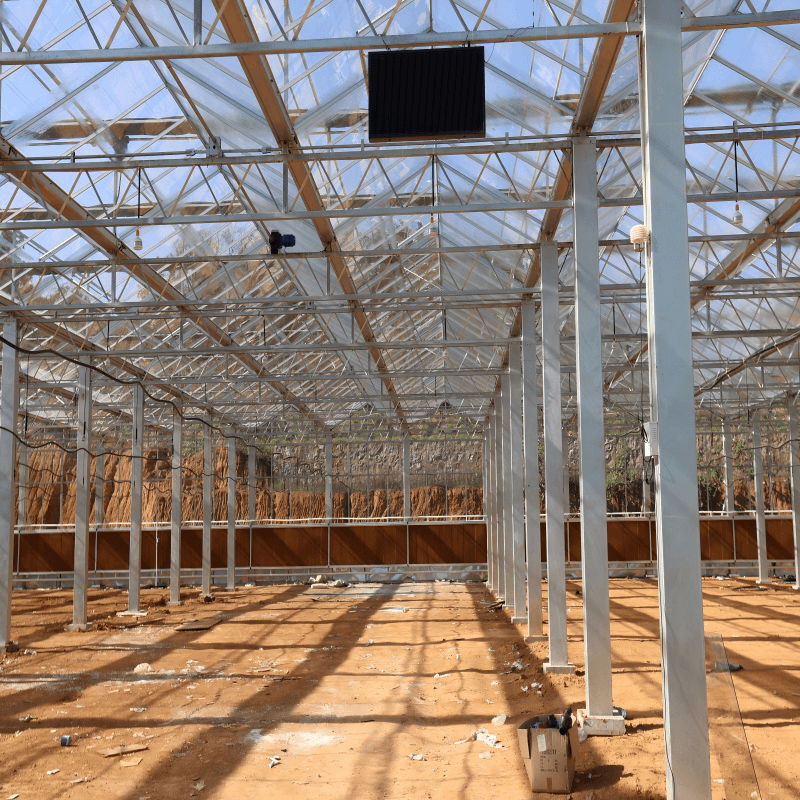
High-density vegetable cultivation relies heavily on precise environmental control and maximum light exposure. Implementing a Commercial Vegetable Glass Greenhouse setup directly impacts the yield of vining crops like tomatoes, cucumbers, and bell peppers. These plants require massive amounts of daily light integral (DLI) to support continuous fruiting cycles.
The high light transmission of tempered glass accelerates photosynthesis, leading to faster fruit development and higher brix (sugar) levels. Operators routinely integrate these structures with advanced hydroponic infrastructure, automated climate control computers, and supplemental LED lighting arrays. The rigidity of the glass allows for tighter seals around vents and doors. This ensures that injected carbon dioxide remains trapped inside the growing area to further boost vegetable production, rather than leaking through flexible plastic seams.
Ornamental plants and cut flowers have distinct physiological requirements compared to fruiting vegetables. A Commercial Floriculture Glass Greenhouse must balance intense light with strict temperature management. Many flower varieties require specific ultraviolet (UV) spectrums to develop deep, vibrant coloration in their petals. Unlike UV-blocking polycarbonates, specific tempered glass formulations allow necessary UV light to penetrate the canopy.
The raw intensity of summer sun through clear glass can scorch delicate ornamental crops. Floriculture setups necessitate the installation of automated shade cloth systems. These retractable screens deploy horizontally across the ceiling during peak solar gain. They protect the flowers from heat stress while allowing diffused light to support steady, uniform growth. The rigid glass roof supports the heavy track systems required for these automated screens without sagging.
Cultivating soft fruits indoors represents a rapidly expanding sector of controlled environment agriculture. A Fruit And Berry Glass Greenhouse provides the ultimate season extension. Growers hit the market with high-value crops like strawberries, raspberries, and blueberries months before field-grown competitors.
These environments require strict management of pollination. Growers introduce commercial bumblebee hives into the enclosed space to pollinate the berry blossoms. The clear, UV-transmitting nature of tempered glass proves highly beneficial here. Bees rely on UV light patterns for navigation and locating flowers. The secure, rigid framing of a glass structure also prevents pests like spotted wing drosophila from infiltrating and decimating the berry crop. The tight glazing tolerances leave no gaps for insect entry.
For large-scale commercial operations, footprint efficiency dictates profitability. Multi-purpose Glass Agricultural Multi-span Greenhouse configurations offer unparalleled scalability. Instead of building multiple freestanding structures, multi-span designs connect several greenhouse bays together at the gutters.
This gutter-connected architecture eliminates interior walls, creating a massive, uninterrupted growing volume. It allows for the seamless operation of automated irrigation booms, internal transport carts, and centralized heating systems. The structural load distribution in these setups requires heavy engineering. The heavy tempered glass roof panels transfer snow and wind loads down through the shared gutter assemblies and into heavy-duty interior support columns. This ensures the massive structure remains stable under extreme weather conditions.
Not all glass structures stand alone. Attached or lean-to configurations build directly against the side of an existing commercial facility or residential masonry wall. This design offers a unique thermal advantage. The solid backing wall acts as a thermal mass. It absorbs radiant heat from the sun during the day and slowly releases it into the greenhouse at night.
This passive heat capture offsets the inherently low insulation value of single-pane glass. Architecturally, lean-to structures require precise integration with the primary building. Installers utilize custom metal flashing and heavy-duty silicone sealants to ensure a perfectly watertight transition between the greenhouse frame and the host wall. This prevents moisture intrusion into the main building and maintains the structural integrity of the shared foundation.
Tempered glass remains entirely unforgiving of structural movement. Flexible polycarbonate panels bend slightly if a frame shifts. Tempered glass instantly shatters if subjected to torsional stress. The foundation requirements for these structures are absolute.
A permanent glass facility requires poured concrete footings or continuous perimeter walls that extend below the local frost line. If a foundation rests above the frost line, the seasonal freezing and thawing of the soil causes frost-heave. Even a millimeter of differential settling across a long greenhouse wall twists the aluminum extrusions. This transfers immense pressure directly to the edges of the glass panels, causing catastrophic failure.
Excavate the perimeter trench to a depth exceeding the local frost line by at least six inches.
Install continuous steel rebar throughout the footing trench to prevent concrete cracking under load.
Pour high-PSI concrete and allow a full 28-day cure time before erecting the steel or aluminum superstructure.
Set anchor bolts with laser-level precision; any deviation forces the base plates out of square, misaligning the entire glazing track.
The method used to secure the heavy glass panels to the metal framework dictates the weatherproofing success of the build. Modern extrusions rely on continuous aluminum capping or heavy-duty EPDM rubber gasket systems. These gaskets create a flexible, watertight seal that holds the glass firmly in place without creating hard pressure points.
Modern design implements single-sheet seamless bays. Older methods stacked multiple smaller panes of glass on top of each other, requiring overlapping seams. Modern structures utilize one solid, double-thick sheet of tempered safety glass per bay. This seamless approach provides massive structural and aesthetic benefits. It eliminates the horizontal overlaps where dirt, algae, and moisture accumulate. This ensures unobstructed light transmission and significantly reduces maintenance labor.
The sheer weight and rigidity of tempered glass dictate the engineering of the surrounding frame. Local building codes require specific wind and snow load certifications for permanent agricultural structures. To support the heavy glazing and withstand external environmental pressures, the frame utilizes thick-gauge extruded aluminum or galvanized steel.
Engineers calculate the required cross-bracing, truss density, and purlin spacing based on regional weather data. In areas prone to heavy snowfall, the roof pitch must be steep enough to encourage snow shedding. The internal trusses must hold the combined weight of the glass and any accumulated ice until it melts.
Structural Component | Load Type | Engineering Requirement | Field Consequence of Failure |
|---|---|---|---|
Roof Trusses | Snow Load / Dead Weight | High-gauge galvanized steel, tight purlin spacing | Roof collapse, total crop loss |
Sidewall Extrusions | Wind Load / Shear Force | Heavy aluminum profiles, cross-bracing | Frame racking, spontaneous glass shattering |
Foundation Footings | Frost Heave / Settling | Concrete poured below frost line | Torsional stress, continuous panel failure |
The most significant operational trade-off of single-pane tempered glass involves its thermal inefficiency. Single-pane glass has a very low R-value, providing minimal insulation against cold outside temperatures. Operators experience high heat loss during winter nights, directly resulting in increased fuel consumption for boilers and forced-air heaters.
This poor insulation acts as the direct trade-off for superior light transmission. Materials offering high insulation, such as multi-wall polycarbonate, inherently block a significant percentage of solar radiation. Growers weigh the ongoing costs of winter heating against the increased crop yields generated by maximum winter light exposure. In high-yield commercial setups, the extra light often pays for the extra heat.
For operations located in extreme northern climates, double-paned insulated glass units (IGUs) present a viable alternative. These units consist of two layers of tempered glass separated by an argon-filled spacer. This configuration drastically improves the R-value, cutting heat loss by more than half compared to single-pane setups.
The structural framing must be significantly upgraded to support double the glass weight. The extrusions require wider glazing pockets to accommodate the thicker IGUs. For year-round high-temperature crops like orchids or tropical foliage, the reduction in winter heating fuel offsets the heavy structural requirements.
When evaluating glazing materials, the timeline of the business plan dictates the choice. Twin-wall polycarbonate installs easily, but it suffers from UV degradation. Within 10 to 15 years, polycarbonate yellows, becomes brittle, and loses significant light transmission. This requires a complete tear-down and replacement.
Tempered glass requires a much higher initial capital expenditure, but it offers a functional lifespan exceeding 50 years. It does not degrade, yellow, or cloud under intense UV exposure. For multi-generational farms or long-term commercial facilities, the durability of glass provides a permanent building envelope that requires only routine gasket maintenance.
The internal tension giving tempered glass its strength acts as its greatest vulnerability during installation. The flat surface of a tempered panel withstands heavy blows, but the edges remain highly sensitive. A minor edge-strike against a metal frame, concrete floor, or stray screw during installation causes the entire panel to instantly disintegrate into thousands of pieces.
Over-tightening fasteners creates another common failure point. If a glazing cap screws down too tightly without proper rubber gaskets, the metal pinches the glass. As the aluminum frame naturally expands in the afternoon heat, that pinch point becomes a crush point, resulting in spontaneous panel failure.
Moving hundreds of heavy, fragile panels requires specialized logistics. You cannot handle tempered glass casually. Professional installation crews utilize heavy-duty vacuum suction cups to lift and maneuver each pane into place. Transporting the glass around the build site requires specialized A-frame carts equipped with rubber dampeners to absorb ground vibrations.
Inspect all vacuum lifters for suction leaks before lifting any roof panels.
Clear the staging area of all gravel and debris to prevent accidental edge strikes when setting panels down.
Halt all glazing operations if wind speeds exceed 15 mph to prevent panels from acting as sails and knocking workers off scaffolding.
Ensure the aluminum frame is perfectly square and level before setting the first pane; out-of-square frames force the glass into a bind.
Even after successful installation, tempered glass faces environmental risks. Thermal shock occurs when a massive, sudden temperature differential hits a single pane of glass. If a heavy shadow falls across half a panel on a freezing day while the other half superheats in direct sun, the uneven expansion causes a stress fracture.
Poor shipping practices cause micro-abrasions on the edges of the glass before it ever reaches the site. These invisible flaws compromise the internal tension of the panel. Weeks or months after installation, a minor temperature shift or wind gust exploits that micro-fracture, causing a delayed, spontaneous shattering of the panel. Always inspect the edges of every panel upon delivery and reject any glass showing chips or rough grinding marks.
Execute the following steps to initiate your build:
Hire a licensed structural engineer to design a foundation plan that accounts for your specific local soil conditions and frost depths.
Request verified wind and snow load certifications from the greenhouse manufacturer to ensure compliance with regional building codes.
Schedule specialized heavy-glass installation contractors equipped with vacuum lifters rather than relying on general laborers for the glazing phase.
Verify all required panel dimensions and frame measurements before ordering, as you cannot cut or alter tempered glass on-site.
A: Tempered glass offers a superior lifespan, unmatched visual clarity, and permanent light transmission without UV degradation. Polycarbonate offers better baseline insulation, higher impact resistance against hail, and requires less structural weight support. The choice depends entirely on whether you prioritize long-term durability and light, or thermal efficiency.
A: No. You cannot cut, drill, or alter tempered glass in any way after the manufacturing process. Attempting to cut it causes the entire panel to instantly shatter. All sizing and edge-work must be completed on annealed glass before it enters the tempering oven.
A: Standard agricultural structures typically utilize 3mm or 4mm thick single-pane tempered glass for sidewalls and roofs. High-end custom structures or those utilizing large seamless bays require 5mm or 6mm glass. Double-pane insulated units are significantly thicker, combining two panes with an internal spacer.
A: Single-pane glass has a very low R-value, meaning it loses heat rapidly in winter. It requires robust supplemental heating systems to maintain growing temperatures. However, its high light transmission helps maximize limited winter sunlight. Lean-to designs or double-pane insulated glass significantly improve winter thermal performance.
A: Standard plate glass is a severe safety hazard. If broken by weather or accidental impact, it shatters into large, heavy, razor-sharp shards that cause lethal injuries and destroy crops. Tempered glass safely crumbles into small, blunt fragments upon impact, protecting workers and plants.
A: Installers secure panels using heavy-duty aluminum bar-caps lined with EPDM rubber gaskets, or specialized stainless steel glazing clips. These systems hold the heavy glass firmly against the frame while allowing for slight thermal expansion and contraction, preventing hard pressure points that cause shattering.


