
Views: 0 Author: Site Editor Publish Time: 2026-10-28 Origin: Site


The global demand for sustainable commercial farming has dramatically accelerated the adoption of Controlled Environment Agriculture. Modern agricultural enterprises require infrastructure offering absolute environmental regulation to meet strict production targets. Unpredictable weather patterns make traditional field farming too risky for high-value yields. Advanced growing facilities now serve as the industry standard. They combine long-term structural durability with excellent light diffusion and superior thermal insulation.
Recent agronomic market analyses highlight a definitive industry shift. Commercial growers are rapidly moving away from seasonal field reliance. Instead, they are investing heavily in multi-bay polycarbonate structures to secure hyper-local, year-round production. This transition mitigates global supply chain disruptions and protects delicate crops from extreme weather anomalies. A highly stable microclimate is no longer a luxury; it is a baseline requirement for commercial viability.
Among the various architectural designs available, the linked-bay configuration offers distinct spatial and climatic advantages. By connecting several bays together without internal dividing walls, these structures create a vast, uninterrupted growing space. Selecting the right crops for your facility dictates your operational strategy. Proper crop alignment is the key to maximizing commercial agricultural profitability and ensuring a rapid Return on Investment. This engineering and agronomy guide explores the most economically viable crops for these advanced systems, providing facility operators with data-driven insights for optimal space utilization.
Unmatched Space Efficiency: Linked structures eliminate interior walls. They offer centralized climate control and seamless logistics, making them the engineering gold standard for commercial-scale farming.
Ideal for High-Wire Vegetables: Tomatoes, cucumbers, and bell peppers thrive exceptionally well. The tall, well-ventilated structures provide ample vertical growing space for heavy vines.
High-Density Crop Potential: Leafy greens and culinary herbs yield substantial returns. The robust structural capacity easily supports vertical and hydroponic farming setups.
Optimal Flower Cultivation: Ornamental flowers benefit significantly from advanced multi-wall panels. Specialized co-extruded layers provide UV protection and diffuse light to prevent petal degradation.
Long-Term Profitability: Aligning specific crop choices with the architectural benefits of a multi-bay layout ensures continuous year-round harvesting.
To fully grasp why specific plants perform better in these environments, facility managers must first understand the technical specifications of this architecture. The structural design directly influences microclimate stability. Consequently, this stability dictates crop suitability and overall yield potential.
Modern cladding panels are engineered to provide exceptional thermal insulation. Compared to traditional single-pane glass or standard polyethylene film, 8mm or 10mm twin-wall plastics trap heat far more effectively. The trapped air between the polycarbonate layers acts as a thermal buffer. This minimizes rapid temperature fluctuations that routinely shock sensitive root systems. This structural property significantly reduces winter heating costs, making it financially viable to grow warm-weather cultivars even in colder geographical regions.
Furthermore, light diffusion plays an equally critical role in commercial agriculture. Direct, harsh beams often cause plant sunburn or create uneven shadow zones. Diffused light scatters immediately upon entry. This scattering ensures that lower canopy leaves receive adequate photosynthetic energy, promoting uniform plant development and higher overall fruit production.
When scaling up operations, the architectural footprint becomes a primary engineering consideration. Multi-bay structures connect several arches or peaks together, entirely eliminating the need for interior dividing walls. Imagine walking into a massive, open-concept warehouse dedicated entirely to plant growth. This seamless area is highly conducive to large-scale crop rotation and the deployment of automated farming equipment.
Engineering Feature | Multi-Bay Design | Single Tunnel Design |
|---|---|---|
Interior Space Utilization | Vast, uninterrupted, highly efficient logistics | Segmented, limited by individual side walls |
Microclimate Control | Centralized large air volume, highly stable | Decentralized, prone to rapid temperature shifts |
Land Footprint | Maximizes square footage with zero gaps | Requires wasted spacing between each tunnel |
Automation Compatibility | Ideal for wide irrigation booms and tractors | Difficult to maneuver large industrial equipment |
Energy Efficiency Rating | Lower surface-area-to-volume ratio saves heating | Higher heat loss due to exposed exterior walls |
Commercial agriculture requires strict risk mitigation against extreme weather events. The cladding material used in these structures is renowned for its impact resistance, often rated at over 200 times stronger than standard float glass. Investing in a high-quality Polycarbonate Board PC Greenhouse provides the structural integrity necessary to withstand severe hailstorms. Built with hot-dip galvanized steel frameworks featuring a 275g per square meter zinc coating, these facilities easily handle wind loads of 0.5 kilonewtons per square meter and heavy snow accumulation. This robust engineering guarantees the facility will maintain its protective envelope through decades of continuous use.
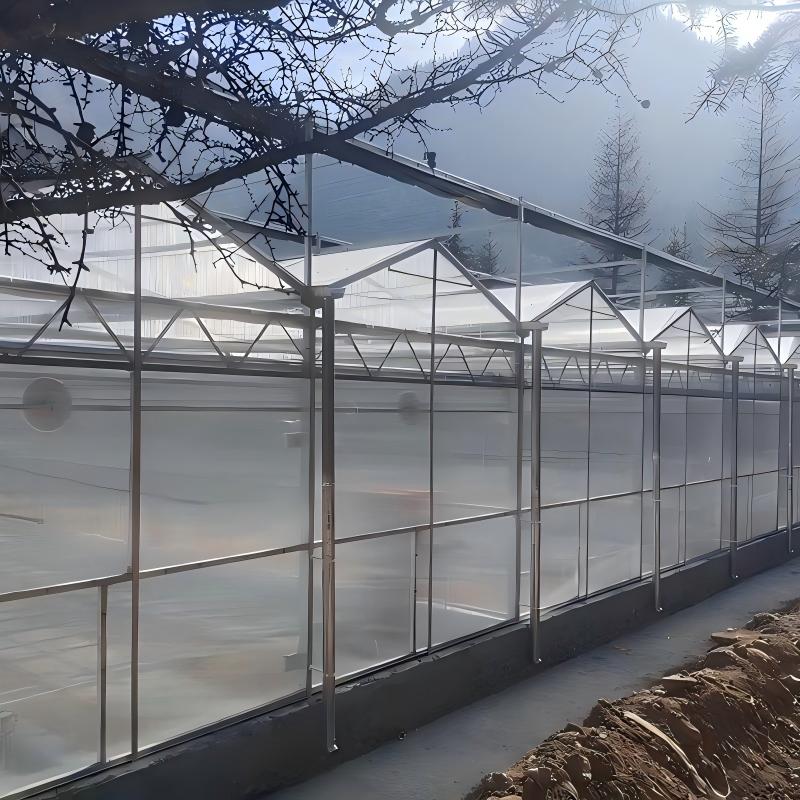
The expansive volume and precise climate control of a linked-bay structure make it the ideal environment for high-yield, commercially viable vegetable farming. The following vegetables consistently deliver excellent returns when grown in these advanced facilities.
Tomatoes remain arguably the most popular and profitable crop grown in commercial setups. As a vining plant, indeterminate tomato varieties require significant vertical height to reach their full yield potential. The high eaves of a modern structure provide the necessary overhead space for vines that can grow up to 12 meters long during a single season. Picture workers standing on automated hydraulic scissor lifts, pruning and harvesting from towering green walls of fruit.
Specifically, these structures easily support the heavy wire trellising systems required to keep the plants upright, often bearing loads exceeding 25 kilograms per square meter. Consistent temperature control is critical here. If temperatures fluctuate wildly, blossom drop occurs rapidly. The immense thermal mass of the enclosed air ensures the stable day-to-night temperature differentials required for optimal tomato production.
Cucumbers and bell peppers share similar environmental requirements. Both demand high humidity and consistently warm temperatures. Cucumbers grow rapidly and feature large leaves that transpire heavy amounts of water. The superior roof ventilation systems standard in multi-bay designs allow operators to purge this excess humidity effectively. Automated rack-and-pinion vents prevent the onset of devastating fungal diseases like powdery mildew.
In contrast, bell peppers require a long, stable growing season to produce thick-walled, heavy fruit. The diffused light provided by the twin-wall roof panels prevents sunscald on the peppers. This optical advantage ensures a high percentage of marketable, premium-grade produce hits the grocery store shelves.
For growers focused on rapid crop turnover, leafy greens like lettuce and spinach are exceptional choices. The vast, unobstructed floor plan of a Multi-Span PC Greenhouse allows for the installation of massive hydroponic setups. Facilities often utilize 9.6-meter or 12-meter clear spans to accommodate extensive Nutrient Film Technique channels or Deep Water Culture floating rafts.
These high-density crops benefit greatly from indirect lighting. The panels provide enough energy for rapid vegetative growth while preventing the localized heat spikes that cause premature flowering in lettuce. The controlled environment facilitates a continuous, year-round harvest cycle, often yielding a fresh crop every thirty to forty days.
Moving beyond traditional vegetables, expansive structures offer the perfect sanctuary for cultivating premium fruit crops. The enclosed space protects delicate fruits from pests, foraging birds, and unpredictable rainfall that causes skin splitting.
Commercial strawberry cultivation has shifted heavily indoors to improve yield consistency and fruit quality. These berries are highly susceptible to soil-borne diseases when grown in traditional open fields. A wide-span layout is perfectly suited for elevated strawberry gutter systems. By raising the plants waist-high and utilizing hydroponic drip irrigation, growers completely eliminate soil pathogens.
This layout provides ample room for rows of suspended steel gutters, maximizing vertical space and drastically increasing yield per square meter. Elevated systems also place the fruit at an ergonomic height. This engineering adjustment significantly reduces labor costs and worker fatigue during the tedious hand-harvesting process.
While slightly less common than tomatoes, specialty melons are highly profitable when grown indoors. These plants produce heavy, sprawling vines and large fruits that require a sturdy structural framework for support. The galvanized steel columns of a commercial facility can easily bear the weight of trellised melons.
Growing melons under a solid roof allows for precise control over irrigation and ambient heat. By carefully managing water stress and maintaining high temperatures during the final ripening stage, growers significantly boost the sugar content of the fruit. Higher Brix levels command premium prices in local wholesale markets.
The floriculture industry demands flawless aesthetic quality. Minor blemishes on petals or stunted vegetative growth directly impact the market value of ornamental plants. Advanced facilities provide the exact environmental parameters required for premium flower cultivation.
Delicate flowers like roses and orchids have strict temperature, humidity, and lighting requirements. Direct, intense sunlight scorches delicate petals and degrades vibrant colors. High-quality roof panels are manufactured with a 50-micron co-extruded UV-resistant coating. This critical layer filters out harmful ultraviolet radiation while allowing the necessary Photosynthetically Active Radiation to pass through seamlessly.
The resulting bright, indirect light is perfect for encouraging robust blooming without causing UV degradation. Stable humidity control within the large air volume prevents water from condensing on the flower heads. Eliminating condensation removes the primary cause of botrytis blight.
For nurseries producing potted succulents or agricultural seedlings, logistics and space management remain critical. The lack of interior walls is a massive operational advantage. When workers navigate the expansive, column-minimized layout, they easily maneuver rolling bench systems. These mobile benches increase usable growing space by up to thirty percent compared to static aisles.
The wide, open pathways make it simple to utilize automated irrigation booms. Nursery staff can transport large shipping racks from the growing area directly to the loading dock without structural interference.
When evaluating commercial structures, the Venlo architectural style is widely recognized as the pinnacle of agricultural engineering. Originating in the Netherlands, this specific roof design has been refined over decades to maximize both light transmission and climate control.
The Venlo roof structure features multiple small, narrow ridges rather than a single wide arch per bay. This specific geometry minimizes the amount of opaque structural steel required in the roof framework. Reducing steel components minimizes shadows and maximizes the amount of natural sunlight reaching the crop canopy.
Furthermore, this design allows for highly efficient, alternating roof ventilation. The vents automate based on wind direction and internal temperature. Opening the roof creates a natural chimney effect that rapidly exhausts excess heat and humidity without relying solely on energy-intensive exhaust fans.
One of the defining features of a Venlo Polycarbonate Greenhouse is its high eave height, often ranging from 4 to 7 meters. This immense vertical volume creates a massive climate buffer. The large body of air inside heats up and cools down much slower than in a low-profile tunnel structure, resulting in unparalleled microclimate stability.
This vertical space is absolutely essential for tall vining crops. It also provides ample room above the plant canopy for the installation of automated thermal screens, supplemental LED lighting fixtures, and overhead irrigation systems without obstructing plant growth.
To ensure commercial success in an evolving agricultural landscape, operators must strategically align their target crops with the exact engineering capabilities of their infrastructure. Choosing the wrong frame height or span width directly impacts profitability.
Before finalizing a crop plan, growers must match their target yield with the architectural specifications of the facility. If a farm plans to grow low-profile crops like lettuce or strawberries, a standard multi-bay structure with a 4-meter eave height is highly cost-effective. However, for high-wire crops like tomatoes or cucumbers, investing in a 6-meter eave height is mandatory to accommodate the vines and suspended harvesting equipment.
By understanding specific planting densities and expected yields per square meter, investors can accurately size their Multi-span Polycarbonate Greenhouse to meet specific production contracts. This precise engineering calculation ensures the facility is neither underutilized nor overcrowded, aligning capital expenditure directly with projected revenue.
The primary financial advantage of a controlled environment is the ability to bypass seasonal market shortages. When field-grown crops are out of season, wholesale prices peak. By integrating commercial heating systems, evaporative cooling pads, and supplemental lighting inside a well-insulated structure, growers maintain peak production during the dead of winter or the scorching heat of summer.
Continuous, year-round harvesting is the most direct path to a rapid Return on Investment. It allows farms to secure lucrative off-season contracts with major grocery chains and local distributors.
To protect your capital investment and ensure the continued health of your crops, routine maintenance of the facility is non-negotiable. Proper upkeep preserves light transmission and prevents catastrophic mechanical failures.
Over time, dust, pollen, and algae accumulate on the exterior cladding. This buildup acts as an unintentional shade cloth, significantly reducing the amount of light that reaches the plants and subsequently lowering crop yields.
Facility managers should wash the exterior panels at least twice a year, typically in the spring and fall. Use a soft-bristled brush or a low-pressure power washer combined with a mild, non-abrasive soap. Avoid harsh chemicals or stiff brushes. Abrasives will scratch the surface and strip away the protective 50-micron UV coating.
When evaluating a general Polycarbonate Greenhouse, routine mechanical inspections are vital for maintaining a perfect growing environment. Maintenance teams must conduct monthly checks of the hot-dip galvanized steel framework, looking for any signs of loose bolting around the load-bearing columns.
The gutter systems, which sit in the valleys between the roofs, must remain entirely clear of leaves and debris to ensure proper water drainage. Clogged gutters lead to structural overloading during heavy rainstorms. Finally, the motors and rack-and-pinion systems operating the roof vents require regular lubrication to ensure they respond accurately to the automated climate control computer.
A multi-bay facility is a highly versatile, durable, and space-efficient engineering marvel capable of supporting a wide variety of high-yield crops. From towering vine vegetables and dense hydroponic leafy greens to delicate ornamental flowers and elevated strawberries, the expansive, climate-controlled environment provides the perfect foundation for agricultural success.
By eliminating interior walls and maximizing light transmission, these structures allow for seamless logistics, advanced automation, and highly stable microclimates. Choosing the right crop, paired with advanced architectural designs like the Venlo style, is the ultimate recipe for commercial farming profitability.
Take the time to evaluate your commercial agricultural goals and target markets carefully. For reliable, high-performance structural solutions tailored to your specific crop needs and local climate loads, explore the professional engineering options available at Jinghao Agri to secure your long-term business objectives.
Typically, high-quality twin-wall panels last ten to fifteen years before light transmission noticeably degrades. The hot-dip galvanized steel frame, however, is incredibly robust. Engineered to resist corrosion, the steel skeleton easily lasts several decades with routine preventative maintenance and proper environmental management.
Yes. The excellent thermal insulation properties of multi-wall plastics trap heat efficiently. When combined with commercial heating and high-pressure fogging systems, it becomes highly efficient to replicate and maintain stable tropical environments. This remains true even in regions experiencing harsh, freezing winter climates.
The Venlo design features exceptionally high eaves and a robust, steel-optimized roof structure. This geometry provides the necessary vertical space for indeterminate vine crops to grow upwards for months at a time. It also offers the superior structural strength required to safely support the massive weight of heavy wire trellising systems loaded with fruit.
Yes. Commercial-grade panels are manufactured with a specialized 50-micron co-extruded UV-resistant coating on the exterior-facing side. This crucial layer protects sensitive plants from solar burn and prevents the plastic material itself from yellowing, degrading, and becoming brittle over time.
For commercial-scale operations, it is significantly more cost-effective. Linked designs drastically reduce the total exterior surface area exposed to the outdoors, which dramatically lowers ongoing heating and cooling costs. Furthermore, they optimize land use by eliminating the wasted space typically required between individual tunnels, allowing you to grow more food per acre.
For commercial vegetable and flower production, 8mm or 10mm twin-wall panels are the industry standard. These thicknesses offer the ideal balance between high light transmission and excellent thermal insulation. Thicker panels like 16mm provide better insulation for extreme cold climates but slightly reduce the light reaching the plants.
These structures are engineered with reinforced hot-dip galvanized steel columns and specialized roof pitches. The smooth exterior surface of the panels encourages snow to slide off into the heated structural gutters, where it melts and drains away. Standard commercial designs safely support snow loads ranging from 0.35 to 0.5 kilonewtons per square meter.


