
Views: 0 Author: Site Editor Publish Time: 2026-10-21 Origin: Site


Winter gardening is a brutal battle against frost. Growers constantly endure freezing temperatures while desperately trying to extend the growing season. Traditional glass structures and thin plastic films lose heat almost instantly as soon as the sun dips below the horizon. This rapid heat loss leaves tender plants completely vulnerable to the biting cold.
Fortunately, a Polycarbonate Greenhouse solves this exact dilemma. It acts like heavy-duty double-glazing for your crops. The structural design effectively traps and retains precious thermal energy. As greenhouse engineers, we constantly see the difference material selection makes in extreme climates. Here, we will break down the precise temperature dynamics of these structures during the harshest months. Furthermore, we will share actionable, field-tested tips to maximize warmth. Your winter harvest should thrive, not merely survive.
Superior Insulation: Multi-wall cellular composition retains heat significantly better than traditional glass or single-layer plastic films.
Massive Temperature Differential: On a crisp, sunny winter afternoon, the interior can easily be 20 to 40 degrees Fahrenheit warmer than the outside air.
Commercial Efficiency: Advanced architectural designs offer unparalleled winter climate control, drastically cutting heating costs for large-scale operations.
Actionable Heating: You can maintain optimal winter temperatures by blending passive solar techniques, thermal mass, and efficient active heating systems.
Polycarbonate is a remarkably durable, lightweight, and highly impact-resistant thermoplastic. Unlike traditional single-pane glass, agricultural grade panels are extruded into twin-wall or multi-wall configurations. The physical structure features hollow channels layered between the inner and outer sheets.
These channels serve a critical engineering purpose. They trap pockets of dead air. Stagnant air is an exceptionally poor conductor of heat. Therefore, this cellular structure creates a powerful insulating barrier that fiercely resists the winter cold. The rapid transfer of thermal energy stops. Freezing drafts stay out, and radiant warmth stays inside.
To truly grasp greenhouse insulation, we must look at the data. The R-value measures thermal resistance. A higher R-value indicates superior insulation. The U-value measures the actual rate of heat loss. A lower U-value is the ultimate goal for any winter grower.
Glazing Material | Approximate U-Value | Approximate R-Value | Winter Heat Retention |
|---|---|---|---|
Single-Layer Poly Film | 1.15 | 0.87 | Poor. High heat loss at night. |
Single-Pane Glass | 1.10 | 0.90 | Poor. Zero thermal buffer. |
8mm Twin-Wall PC | 0.58 | 1.72 | Excellent. Industry standard. |
16mm Multi-Wall PC | 0.40 | 2.50 | Superior. Best for deep freezes. |
A standard multi-wall structure offers vastly superior thermal resistance compared to traditional materials. Less heat escapes into the freezing night sky. Consequently, growers experience a highly stable internal climate and significantly lower heating bills.
During daylight hours, the structure operates on the fundamental principles of the greenhouse effect. Translucent panels allow short-wave solar radiation to pass through unimpeded. This includes visible light and UV rays. When this radiant energy strikes the soil, flooring, and plants, it is absorbed. It is subsequently re-emitted as long-wave infrared radiation. We feel this as heat.
Thermoplastic materials are highly opaque to long-wave radiation. As a result, this newly generated heat cannot easily escape back through the roof. Picture stepping into your growing space on a bright but freezing 30-degree January afternoon. You might be shocked to find the interior basking in a balmy 65 to 70 degrees. This massive temperature differential provides an invigorating daytime environment for plant photosynthesis.
Daytime warmth is fantastic, but the harsh reality of winter nights must be addressed. Without active heating systems or significant thermal mass, the inside ambient temperature will eventually drop close to the outside baseline. However, the true engineering advantage lies in the rate of heat loss.
Glass structures dump heat the moment the sun sets. In contrast, multi-wall insulation delays the freezing point. It slows the temperature drop to a gradual decline. This acts as a vital buffer. A slow release protects delicate root systems and foliage from sudden, shocking temperature crashes. Those rapid crashes are exactly what prove fatal to winter crops.
Recent agricultural market analyses highlight a definitive shift in winter growing methodologies. Global energy costs continue to soar. Extreme winter weather patterns are becoming increasingly unpredictable. Confronted with these realities, modern commercial and hobby growers are abandoning traditional single-pane glass.
The industry is heavily pivoting toward high-R-value thermoplastics. This transition is not merely about surviving a random frost. It is driven by a broader agricultural technology movement toward sustainable, low-carbon-footprint farming. Advanced insulated structures minimize the reliance on constant, heavy active heating. This aligns perfectly with global energy conservation goals while maintaining impressively high off-season crop yields.
The gauge of your panels directly dictates your winter warmth potential. A 4mm twin-wall setup is perfectly suitable for mild winters. It will easily extend your season into late fall. However, it will struggle against deep, prolonged freezes.
Moving up to an 8mm or 10mm twin-wall provides the industry-standard balance. It offers excellent light transmission paired with robust thermal retention. For those cultivating in harsh, snowy climates, a 16mm multi-wall configuration is practically mandatory. The multiple layers of trapped air provide maximum insulation.
Freestanding individual greenhouses often consume too much land and lose too much ambient heat. For large-scale agricultural enterprises, this is highly inefficient. The multi-span design ingeniously connects multiple greenhouse bays together. It completely removes the interior dividing walls to create one massive, unified growing space.
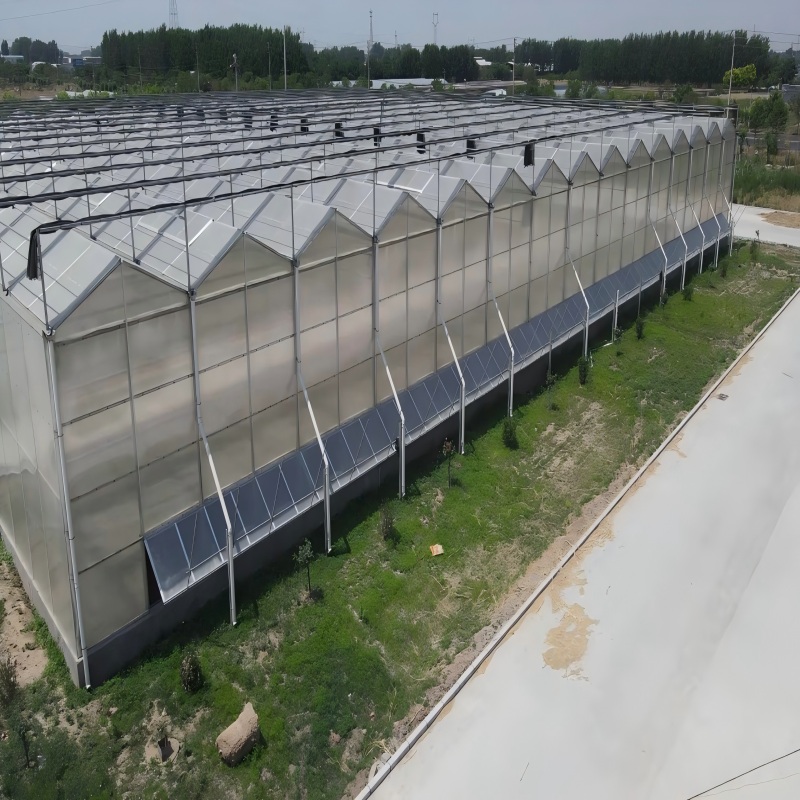
When evaluating structural benefits for expansive operations, a Multi-span Polycarbonate Greenhouse is considered the gold standard. The primary winter advantage lies in its surface-area-to-volume ratio. Interior bays share walls. There is significantly less exterior surface area exposed to freezing winds compared to multiple freestanding structures. Less exposed surface area translates directly to drastically reduced heat loss.
Originating in the Netherlands, the classic Venlo design features a roof engineered with smaller, narrower ridges compared to traditional wide-span, arched roofs. A Venlo PC Sheet Greenhouse leverages this specific geometry to maximize light transmission. Winter sunlight is notoriously scarce and weak. Venlo roof angles are mathematically optimized to capture low-angle winter rays. Crops receive the necessary photons even in the bleakest days of December.
Furthermore, structural integrity is paramount. These structures are built with hot-dip galvanized steel skeletons. They are engineered to handle extreme winter weather, boasting impressive wind load and snow load ratings. Heavy snow sheds easily, preventing catastrophic structural collapse.
Thermal mass refers to dense materials that absorb heat during the day and slowly release it at night. Water boasts one of the highest specific heat capacities available. Line the north wall of your structure with large, black-painted water barrels. Throughout a sunny winter day, they silently absorb solar radiation. As the air chills, these barrels act as a thermal battery. They radiate a gentle, life-saving warmth back into the space.
Convective heat loss through sneaky drafts will instantly ruin your best heating efforts. Before winter sets in, meticulously inspect the perimeter baseboards, roof vents, and door frames. Apply heavy-duty EPDM weatherstripping to the doors. Use expanding foam or silicone caulk to seal any structural gaps. Your heated air must stay indoors.
While passive methods are brilliant, maintaining a strict baseline temperature in deep-freezing climates eventually requires active heating. For expansive, unified commercial designs, operators implement centralized heating. A Multi-Span PC Greenhouse can utilize large boiler systems with radiant hot-water pipes. This achieves precise, uniform winter climate control at a fraction of the traditional energy cost. For smaller setups, electric fan heaters provide clean, dry heat and circulate air to prevent mold.
Heat naturally rises. The warmest air on a cold winter night often ends up trapped at the peak of the roof, far away from your shivering plants. Modern commercial setups seamlessly integrate automated horizontal thermal screens. Deployed just below the roofline at dusk, these screens trap rising warm air down at the crop level. This drastically shrinks the volume of air that needs to be heated overnight.
If you rely purely on passive solar heat and thermal mass, you can still successfully cultivate a wide variety of cold-hardy crops. Plants such as spinach, curly kale, winter lettuce, carrots, and radishes actually thrive in cool environments. A touch of frost often sweetens the taste of winter greens. The insulated structure prevents the soil from freezing solid, allowing continuous harvests.
If you utilize a supplemental heater to maintain a minimum nighttime temperature above 50 degrees Fahrenheit, your horticultural options expand dramatically. You can successfully overwinter tender perennials or cultivate fragrant citrus trees like Meyer lemons. You can even grow summer staples like tomatoes, peppers, and cucumbers. Thanks to superior multi-wall insulation, running a heater remains economically viable.
High-quality multi-wall panels carry a higher initial purchase price than single-layer polyethylene film. However, the long-term economics overwhelmingly favor the thermoplastic approach. The exceptionally high R-value drastically slashes winter heating bills. Over a standard lifespan of 10 to 15 years, cumulative energy savings easily offset the initial capital expenditure. It is a financially brilliant investment for serious growers.
Winter weather is notoriously unforgiving. Glass structures are highly susceptible to shattering from hail, falling ice, and the sheer crushing weight of heavy snow loads. In stark contrast, polycarbonate is virtually unbreakable. It withstands severe impacts and extreme freezing-and-thawing cycles without cracking, yellowing, or degrading.
A high-quality polycarbonate structure provides the exact engineering and insulation required to defy the freezing months. The ingenious multi-wall design effectively traps solar heat during the day and slows its escape at night. Year-round harvesting shifts from a stressful challenge into a highly reliable, profitable reality.
Whether you require a heavy-duty backyard setup or a sprawling, automated commercial facility, prioritizing thermal resistance is the key to off-season success. Evaluate your local climate, select the appropriate panel thickness, and implement strategic heating techniques. Ready to upgrade your winter growing capabilities? Explore the professional-grade structures at Jinghao Agri to find the perfect architectural fit for your agricultural needs.
It depends entirely on your local climate zone and the specific crops you intend to grow. If you are cultivating cold-hardy vegetables in a mild to moderate winter climate, passive solar heat combined with thermal mass is usually sufficient. However, if you are growing tender tropicals, or live in a deep-freezing climate, a supplemental heater is required to prevent plant death. Fortunately, due to the high insulation properties, you will use significantly less energy than you would in a traditional glass structure.
Polycarbonate is significantly warmer. Single-pane glass conducts heat very quickly. It allows the warmth generated during the day to escape rapidly as soon as the sun goes down. Multi-wall panels feature a fluted design that traps dead air between the layers. Stagnant air is a poor conductor of heat. This cellular structure offers superior insulation, keeping the interior warmer for much longer during freezing nights.
Yes, they are exceptionally well-suited for snowy climates. The combination of strong metal framing, often galvanized steel or heavy-duty aluminum, and flexible, impact-resistant panels makes them highly capable of bearing heavy snow loads. Commercial designs are specifically engineered with roof pitches that encourage snow to slide off naturally.
Condensation occurs when warm, moist interior air hits the cold interior surface of the panels. To combat this, ensure proper ventilation even during winter. Briefly opening roof vents on sunny days allows trapped humidity to escape. Additionally, utilize horizontal airflow fans to keep air moving, preventing moisture from settling. Many premium panels also come treated with an anti-drip coating that forces condensation to run down the sides rather than dripping onto your plants.
While a full concrete slab is not strictly mandatory, a solid perimeter foundation is highly recommended for winter growing. A concrete perimeter footing, brick base, or treated timber frame anchors the structure against severe winter winds. More importantly, it creates a tight seal at the base. This prevents freezing drafts from sweeping under the frame and stealing your hard-earned heat. A proper foundation is a critical component of overall thermal efficiency.


