
Views: 0 Author: Site Editor Publish Time: 2026-08-03 Origin: Site


Polycarbonate offers superior impact resistance and thermal efficiency compared to glass, but its surface is highly susceptible to micro-abrasions and chemical degradation. Growers often underestimate how quickly environmental fallout degrades light transmission. Improper cleaning protocols—using abrasive tools or incompatible solvents—can strip the UV-protective co-extruded layer. This permanently reduces Photosynthetically Active Radiation (PAR) transmission and negatively impacts crop yields. A mere 10% drop in light transmission can delay harvest cycles by weeks. Maintaining optical clarity requires strict adherence to material-specific handling procedures. This guide outlines the exact, manufacturer-approved methodologies for cleaning a polycarbonate greenhouse. We detail the required materials, chemical constraints, and preventative maintenance strategies to maximize panel lifespan. You will learn how to remove stubborn organic buildup without compromising the structural integrity of your glazing.
Chemical Compatibility is Non-Negotiable: Never use ammonia, bleach, or petroleum-based solvents; rely exclusively on pH-neutral, mild detergents diluted in lukewarm water (e.g., 1:200 ratio).
Mechanical Damage Prevention: Avoid squeegees, stiff brushes, and high-PSI pressure washing. Microfiber cloths, 100% cotton textiles, and abundant water are required to prevent micro-scratching.
Internal Flute Protection: Algae and dirt buildup inside twin-wall or multi-wall panels must be prevented at the installation phase using proper anti-dust breather tapes and U-profiles.
Scalability Dictates Method: Maintenance approaches must scale appropriately, from manual low-pressure washing for residential builds to specialized soft-wash booms for commercial facilities.
Routine maintenance directly dictates the operational efficiency of your growing environment. Accumulated dust, pollen, and hard water scaling create a physical barrier on the exterior glazing. This barrier scatters incoming sunlight and reduces the overall light transmission percentage reaching the crop canopy. Lower light transmission directly delays plant growth cycles. A reduction in Photosynthetically Active Radiation (PAR) means lower daily light integrals (DLI). Plants require specific DLI targets to trigger flowering and fruiting. When panels remain dirty, you lose yield volume and extend the time to harvest.
Polycarbonate panels feature a microscopic UV-resistant layer. Manufacturers co-extrude this layer onto the exterior surface during production. It protects the raw plastic polymer from solar radiation. Chemical burns from harsh solvents strip this layer away. Abrasive scrubbing physically scratches it off. Once you compromise this UV protection, the underlying polycarbonate undergoes rapid photo-oxidation. The plastic turns yellow and becomes structurally brittle. A minor impact from hail or wind debris will then shatter the panel. Protecting this microscopic layer is the primary goal of any cleaning protocol.
Most manufacturers provide a 10-year warranty guaranteeing light transmission levels. These warranties contain strict maintenance clauses. Using incompatible cleaning agents voids the warranty immediately. High-pressure washing also violates standard terms. You must maintain detailed logs of your cleaning procedures and the chemicals used. Adhering to approved methods protects your financial investment and ensures long-term structural viability.
Contaminant Type | Impact on Light Transmission | Secondary Structural Risks |
|---|---|---|
Standard Dust & Soil | 5% to 15% reduction in PAR | Acts as an abrasive during high winds, causing micro-scratches. |
Pollen & Tree Sap | 10% to 20% reduction in PAR | Sap hardens and chemically bonds to the UV layer if left untreated. |
Hard Water Scaling (Calcium) | 15% to 25% reduction in PAR | Creates magnifying points that cause localized heat damage to the plastic. |
Internal Flute Algae | 30%+ reduction in PAR | Traps moisture, increasing panel weight and degrading edge seals. |
Selecting the correct cleaning solution prevents irreversible chemical damage. You must use mild, pH-neutral dish soaps. Standard liquid dish detergents perform exceptionally well. They contain no harsh degreasers or alkaline additives. Always dilute the detergent properly before application. Mix one part detergent to 200 parts lukewarm water. This weak solution provides enough surfactant action to lift dirt. It will not attack the plastic polymer.
Commercial operations often require specialized polycarbonate cleaners. You must evaluate the Safety Data Sheets (SDS) before purchasing any bulk chemical. Confirm the chemical composition aligns with polycarbonate compatibility charts. Avoid any commercial cleaner containing hidden solvents. If the SDS lists any petroleum distillates, reject the product immediately.
Mechanical abrasion ruins polycarbonate faster than chemical degradation. Select your cleaning tools carefully. Use soft cellulose sponges or premium microfiber cloths. Look for microfiber towels with a rating of 300 GSM (Grams per Square Meter) or higher. 100% cotton towels also work well. For reaching high roof sections, attach RV or marine-grade wash brushes to extension poles. Ensure these brushes feature flagged bristles. Flagged bristles have split ends. This makes them exceptionally soft and safe for plastics.
You need a reliable, low-pressure water source. A standard garden hose equipped with a gentle spray nozzle works perfectly. Implement the two-bucket system for all manual washing.
Fill the first bucket with your diluted pH-neutral cleaning solution.
Fill the second bucket with clean rinse water.
Dip your sponge into the soapy water and wash a small section of the panel.
Rinse the dirty sponge thoroughly in the clean water bucket before dipping it back into the soap.
This method prevents you from dragging abrasive grit back across the panel surface. Changing the rinse water frequently keeps the process effective.
Using the wrong chemicals or tools causes immediate damage. Review the table below to understand exactly what to exclude from your maintenance routine.
Category | Items to Strictly Avoid | Resulting Damage |
|---|---|---|
Chemicals | Ammonia (Windex), acetone, benzene, carbon tetrachloride, highly alkaline cleaners. | Chemical crazing (micro-cracking), severe yellowing, immediate loss of impact resistance. |
Tools | Squeegees, abrasive scouring pads, metal scrapers, stiff-bristled brooms. | Deep surface gouges, removal of the UV-protective layer, permanent hazing. |
Equipment | Pressure washers exceeding 1,500 PSI, zero-degree spray nozzles. | Water forced into internal flutes, blown edge seals, structural fracturing. |
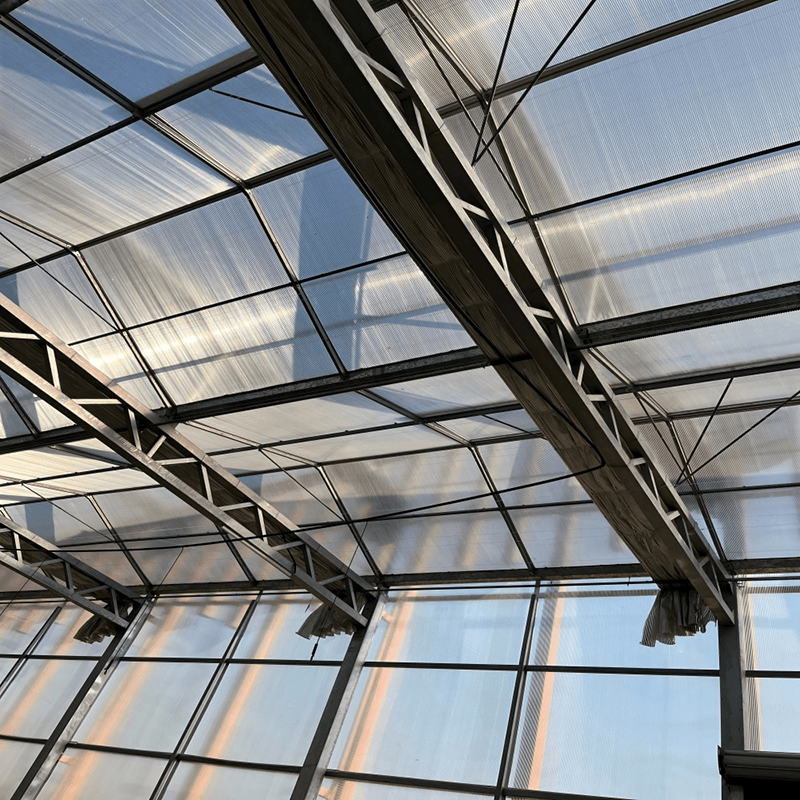
Timing your maintenance maximizes its effectiveness. Schedule deep cleans in late winter or early spring. This timing restores maximum light transmission just before the peak growing season begins. Environmental conditions during the wash dictate the final result. Clean only on overcast days. Early morning or late evening hours also work well. Cleaning in direct sunlight heats the panels. High heat causes the water to evaporate rapidly. Rapid evaporation leaves behind concentrated soap residue. It also bakes hard water minerals into the plastic. These deposits etch into the surface and create permanent cloudy spots.
Never touch a dry polycarbonate panel with a sponge or cloth. You must perform a thorough, low-pressure pre-rinse first. Use your garden hose to flood the surface with water. This action dislodges loose particulate matter. Sand, dirt, and dried leaves will wash away. Removing this grit prevents you from grinding it into the plastic during the agitation phase. Spend ample time on the pre-rinse. Ensure the surface is entirely wet and free of loose abrasives.
Always wash panels using a top-down method. Start at the roof ridge and work your way down to the eaves. This prevents dirty runoff from contaminating areas you just cleaned. Apply the soapy solution generously. Rely on gentle agitation rather than heavy scrubbing. Let the soapy water dwell on the surface for three to five minutes. This dwell time allows the surfactants to break down organic matter naturally.
Address localized heavy soiling carefully. Bird droppings and tree sap require patience. Never use a scraper or your fingernail to remove them. Instead, soak a microfiber cloth in warm soapy water. Press it against the soiled area to create a wet compress. Let it sit for several minutes. The heat and moisture will soften the debris. You can then wipe it away gently.
Rinse the panels thoroughly before the soap solution has a chance to dry. Dried soap causes chemical etching over time. Use a steady stream of low-pressure water to flush all detergent from the surface. Drying the panels properly prevents hard water spots. Hard water spots contain calcium and magnesium. These mineral deposits act as tiny magnifying lenses for sunlight. They cause localized heat damage to the plastic. Use clean, dry microfiber cloths to gently pat the panels dry. A synthetic chamois also works well for removing standing water.
The Venlo A-frame roof design presents specific access challenges. The steep pitch and numerous structural peaks require specialized approaches. Safety protocols strictly prohibit walking directly on polycarbonate glazing. The material cannot support concentrated point loads. A commercial Venlo PC Sheet Greenhouse requires specialized roof-crawling soft-wash systems. These automated machines distribute weight evenly across the aluminum glazing bars. They clean the panels without placing any physical stress on the plastic sheets. Utilizing these systems ensures worker safety and prevents structural damage.
Large-scale operations demand efficiency. Manual washing becomes impossible across acres of roofing. Operators utilize automated cleaning booms for these massive structures. A Multi-Span PC Greenhouse benefits significantly from installing reverse osmosis (RO) water filtration systems. RO systems remove all dissolved solids and minerals from the water supply. Using RO water for the final rinse eliminates hard water spotting entirely. This eliminates the need for manual drying. It drastically reduces labor hours and improves overall light transmission.
Enclosed planting environments require dual-sided maintenance. A Polycarbonate Board PC Greenhouse For Planting faces distinct challenges on the exterior and interior. Exterior maintenance focuses on managing environmental fallout, pollen, and sap. Interior maintenance is often more complex. You must manage interior condensation, which traps airborne dust. You also need to clean chemical residues left behind by foliar sprays. Misting systems frequently cause hard water buildup on the interior walls. Safely disinfecting the interior polycarbonate surfaces between crop cycles requires using highly diluted, approved sanitizers. You must rinse these sanitizers completely to prevent degrading the interior anti-drip coatings.
Twin-wall and multi-wall panels feature hollow internal flutes. These flutes provide excellent insulation but create a structural vulnerability. If the panel edges are improperly sealed, capillary action draws moisture inside. This moisture carries fungal spores, algae cells, and fine dust. The greenhouse environment provides perfect heat and light for these organisms. The result is massive internal algae blooms and structural darkening. This contamination blocks light and ruins the aesthetic of the structure.
Cleaning inside contaminated flutes is highly difficult. You must remove the bottom U-profiles to access the open channels. Use an air compressor to blow out dry dust and debris gently. Keep the PSI low to avoid blowing out the internal ribs. For algae infestations, you can flush the flutes with a mild hydrogen peroxide solution. Inject the solution at the top and let it drain out the bottom. However, you must acknowledge a realistic limitation. Once heavily contaminated, internal flutes rarely return to 100% clarity. The internal surfaces are easily stained. Because remediation is so difficult, prevention remains paramount.
Many growers ask if taping the panel edges actually works. Taping works flawlessly, but only as part of a complete, uncompromised system. You must apply solid aluminum tape to the top edge (ridge) of every panel. This solid tape blocks rain and exterior water entry entirely. You must apply anti-dust breather tape to the bottom edge (eaves). Breather tape features microscopic pores. It allows internal condensation to drain out while filtering out micro-particles and insects. Finally, the polycarbonate U-profiles covering the bottom tape must feature weep holes. These weep holes ensure moisture escapes the profile track rather than pooling against the tape.
Facility managers must weigh the cost of in-house labor against the risk of panel damage. Untrained staff often grab the nearest stiff brush or glass cleaner to save time. This mistake ruins high-value panels instantly. While professional services carry a higher upfront cost, they mitigate the risk of voiding warranties. Professional crews understand chemical compatibility and possess the correct soft-wash equipment.
Vetting commercial greenhouse cleaners requires strict oversight. Use a qualification checklist before hiring any contractor.
Verify they do not use standard glass-cleaning chemicals or heavy degreasers.
Check their liability insurance specifically regarding UV layer damage.
Confirm they exclusively use soft-wash techniques and low-pressure delivery systems.
Ask for references from other polycarbonate structure owners to verify their track record.
Review their standard operating procedures for working around automated vent systems.
Audit your current panel clarity and measure light transmission levels across different zones using a PAR meter.
Inspect all edge-sealing tapes and U-profiles for failure, peeling, or blockage, and replace compromised sections immediately.
Procure chemically compatible, pH-neutral cleaning supplies and soft microfiber materials before assigning maintenance tasks.
Schedule your comprehensive deep cleaning session during overcast conditions before the next seasonal transition begins.
A: Late winter or early spring is ideal. Cleaning during this period maximizes light transmission right before the peak growing season begins. Always choose an overcast day or clean during early morning hours to prevent rapid evaporation and soap etching.
A: High-pressure washing is strictly discouraged. Pressure exceeding 1,500 PSI or spraying at close range can strip the protective UV layer and force water into the panel flutes. If you must use one, maintain a wide fan spray from a safe distance for pre-rinsing only.
A: White vinegar is generally safe when heavily diluted, but it is not the optimal choice. Highly acidic solutions can degrade the UV coating over time. A pH-neutral mild dish detergent mixed with lukewarm water remains the safest and most effective cleaning agent.
A: Removing internal algae is extremely difficult. You must remove the bottom U-profile and flush the flutes with a mild hydrogen peroxide solution. Prevention through proper installation of anti-dust breather tape and weep holes is far more effective than attempting remediation.
A: No. Standard glass cleaners like Windex contain ammonia. Ammonia causes immediate chemical degradation to polycarbonate, leading to crazing (micro-cracking), severe yellowing, and structural brittleness. Only use pH-neutral soaps free of harsh solvents.
A: Commercial facilities typically require a thorough exterior cleaning once or twice a year. Interior cleaning frequency depends on the crop cycle, foliar spray usage, and condensation levels. Regular visual inspections dictate the exact schedule to maintain optimal PAR transmission.
A: Never scrape tree sap. Apply a microfiber cloth soaked in warm, soapy water directly over the sap. Let it dwell for several minutes to soften the resin. Gently wipe it away, repeating the process if necessary until the surface is completely clean.


