
Views: 0 Author: Site Editor Publish Time: 2026-06-12 Origin: Site


Buyers eventually move past the inspiration phase and need realistic budgeting figures for capital expenditure planning. A glass greenhouse represents the highest initial investment among modern glazing options. However, it delivers maximum light transmission, extreme longevity, and superior structural integrity. Commercial growers and estate planners alike face a complex landscape of material choices and structural requirements. You need clear, hard data to make informed choices. Total cost is rarely just about the structure itself. Site preparation, environmental controls, and compliance engineering heavily dictate the final invoice you will pay. Understanding these layered elements prevents massive budget overruns. You will learn how scale, material choices, and specific agricultural applications drive the final price. We will break down baseline costs, deconstruct the bill of materials, and expose hidden expenses to guide your project planning.
Cost Spectrum: Prices range from $50–$150+ per square foot, heavily dependent on scale, automation, and geographic wind/snow load requirements.
Material Impact: Diffused and tempered glass, paired with heavy-duty structural aluminum, drive upfront costs but lower long-term maintenance.
Hidden Variables: Site leveling, utility trenching, and foundation pouring routinely add 20–30% to the initial structural quote.
Application Dictates Price: Purpose-built structures (e.g., a Fruit And Berry Glass Greenhouse) require different height and structural support than propagation environments.
The premium consumer tier focuses on aesthetics and durability. Complete kits typically run between $15,000 and $50,000+. Small backyard footprints might cost less, but elaborate custom designs push the budget higher. Aesthetic architectural features increase the cost significantly. Victorian peaks, steep roof pitches, and decorative ridge crestings require specialized manufacturing. You pay a premium for custom paint finishes on the aluminum frame. These structures add immense property value but demand a high initial outlay.
Research facilities, educational institutions, and boutique farming operations fall into this category. You can expect to spend between $75 and $150 per square foot. Per-square-foot costs often drop as the footprint increases due to economies of scale. However, environmental system complexity rises sharply. Universities require strict isolation zones and precise climate tracking. Boutique farms need commercial-grade irrigation and automated venting. You balance the structural savings of a larger footprint against the heavy expense of specialized internal hardware.
Multi-acre investments operate on a completely different financial model. These massive structures often cost $2M or more to get off the ground. Planners calculate costs by the hectare rather than the square foot. At this massive scale, automated climate control and logistics integration heavily influence the final number. High-tech Venlo-style structures dominate this tier. You invest heavily in centralized boiler systems, massive water storage tanks, and automated harvesting tracks. The structural skeleton becomes a smaller percentage of the total project budget.
Your choice of glass radically alters both performance and price. Standard annealed glass is the cheapest option but shatters into dangerous shards. Safety tempered glass costs more but breaks into harmless cubes, ensuring worker safety and meeting modern building codes. Premium diffused glass represents the top tier. It scatters incoming sunlight to prevent canopy hot spots and boosts overall plant growth. You always face a strict trade-off between R-value and light transmission. Double-pane glass improves insulation dramatically but reduces light penetration and doubles your glazing budget.
The skeleton holds everything together. Structural aluminum resists corrosion better than galvanized steel in highly humid environments. Aluminum extrusions cost more but offer a longer lifecycle. Local building codes dictate the exact gauge and weight of the metal required. Engineers must account for regional seismic activity, high wind profiles, and heavy snow loads. Thicker aluminum profiles directly impact the price. Do not attempt to save money by under-engineering the frame. A collapsed roof costs far more than properly specified extrusions.
Glass cannot flex. It shatters if the ground shifts. Glass structures require rigid, zero-flex foundations compared to flexible poly-tunnels. You must install concrete perimeter walls or full concrete slabs. Deep piers must sit below the local frost line to prevent winter heaving. This extensive concrete work affects the budget massively. You pay for cement trucks, rebar, forms, and specialized masonry labor before erecting a single aluminum post.
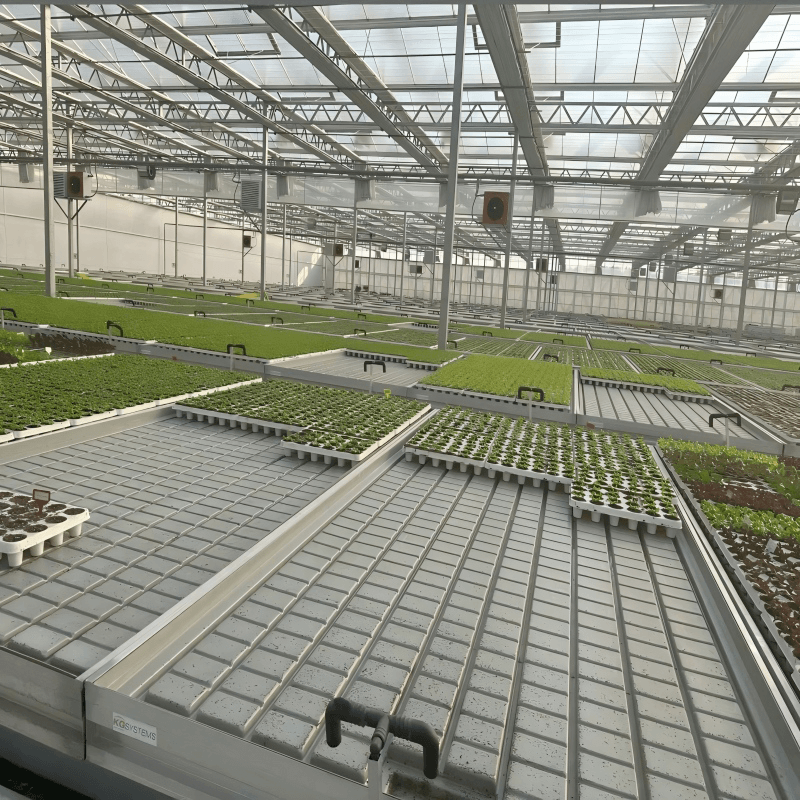
Propagation requires specific, highly controlled infrastructure. A Nursery And Seeding Glass Greenhouse demands pristine environmental conditions. You must factor in investments for heavy-duty rolling benches to maximize floor space. High-pressure fogging systems maintain strict humidity levels without soaking delicate seedlings. Precise multi-zone bottom heating is absolutely essential for rapid root development. You install specialized hot water pipes directly under the seedling trays. These dense, intricate internal systems increase the initial build cost per square foot significantly compared to an empty shell.
Vine and canopy crops need completely different structural proportions. A Fruit And Berry Glass Greenhouse requires much taller gutter heights. Tomatoes and cucumbers grow vertically on long vines, requiring massive vertical clearance. You need reinforced trellis supports to hold heavy, mature fruit loads safely. Advanced shading and cooling systems prevent severe heat stress during peak summer months. The taller, heavily reinforced steel frame costs significantly more than a standard low-profile structure. You also invest heavily in hanging gutter systems to collect runoff water efficiently.
Internal systems dictate whether your plants thrive or perish. We can categorize these components to understand their financial impact.
System Category | Primary Function | Cost Impact Level |
|---|---|---|
HVAC & Venting | Temperature regulation, humidity exhaust | High |
Sensors & Computers | Data logging, automated decision making | Medium |
Supplemental Lighting | Year-round DLI (Daily Light Integral) management | High |
Fertigation | Automated nutrient and water delivery | Medium |
You must break down the costs of automated venting, hydronic heating, and evaporative cooling. Frame these not as optional add-ons, but as critical components of operational viability. Hydronic pipe rails provide incredibly efficient radiant heat. However, they require expensive commercial boilers and miles of steel piping. Evaporative cooling pads and massive exhaust fans consume significant electricity and require constant water flow. Automated roof vents require heavy-duty rack-and-pinion motors to open heavy glass panels against strong winds.
Modern agriculture relies heavily on precise environmental data. Environmental control computers act as the brain of the facility. You will pay for sophisticated software and durable hardware. Weather stations mount to the roof to monitor wind speed, rain, and solar radiation. Automated fertigation systems mix nutrients perfectly and deliver them on a tight schedule. Complex software integration adds significant programming fees. You also pay for specialized sensors that monitor vapor pressure deficit (VPD) and soil moisture levels in real-time.
Year-round production often mandates supplemental lighting. Integrating LED top-lighting or inter-canopy lighting requires very high capital expenditure. Modern LEDs cost significantly more upfront than legacy high-pressure sodium (HPS) fixtures. However, they save massive amounts of electricity and produce less destructive heat. You must wire these fixtures properly to handle the electrical load safely. Hanging thousands of heavy light bars adds considerable labor costs to the initial build phase.
Grading, soil compaction, and drainage infrastructure happen before construction even begins. Uneven land requires bulldozers and excavators to level the footprint. You must compact the soil to precise engineering standards to support heavy concrete footings. Poor drainage ruins facilities quickly. You must dig retention ponds or install extensive underground drainage pipes to manage heavy storm runoff safely.
Buyers frequently underestimate the sheer cost of utility connections. You must trench high-voltage three-phase electrical lines to the site to run industrial motors and lights. Commercial gas lines for large heating boilers require deep, heavily regulated trenches. High-capacity water mains are essential to feed irrigation and cooling systems. Long distances from municipal hookups multiply these costs exponentially. Rural sites might require drilling expensive new agricultural wells.
Bureaucracy carries a hefty price tag. Local municipalities require stamped architectural plans. Structural engineering plans ensure absolute safety compliance for commercial operations. Hiring specialized agricultural engineers involves substantial consulting fees. Navigating local zoning boards takes time and money. You might need to conduct environmental impact studies or traffic assessments before breaking ground. Budget generous timelines and funds for the permitting phase.
Evaluating vendor quotes requires sharp attention to detail. Follow these steps to protect your investment.
Analyze the Scope: Verify exactly what materials the vendor includes in the final price.
Check the Exclusions: Look for fine print excluding heavy machinery rentals or local permits.
Evaluate the Labor: Determine if the vendor provides trained installation crews or just ships parts.
Assess the Timeline: Lock down a firm delivery schedule to align with your planting season.
Guide your buying process by reading quotes critically. A surprisingly low quote often excludes installation labor. It might leave out heavy machinery rental, cranes, or the required foundation work. Materials-only quotes leave you responsible for hiring local contractors to piece a complex puzzle together. Turnkey solutions cost much more upfront. However, they guarantee a finished, functional product managed by a single responsible project supervisor.
Evaluate the deep financial value of structural warranties. Look closely for glass-seal guarantees to prevent costly leaks. Local parts availability matters immensely when crucial equipment breaks mid-winter. A cheap imported kit might lack reliable lifecycle support. You need replacement motors, vent racks, and custom glass panes shipped quickly to prevent crop loss. Prioritize vendors who maintain robust domestic parts warehouses.
Provide a strict checklist for vendor selection. Demand references for similar climate zones. A vendor from a warm climate might not understand heavy snow loads. Verify their in-house engineering capabilities. Scrutinize the exclusions list on the contract carefully. Ensure they possess a proven track record of delivering projects on time and within the stated budget.
Evaluating the true cost of these advanced structures requires looking at a 20-to-30-year lifecycle rather than just the initial structural kit. The upfront capital expenditure ensures extreme durability and peak crop performance for decades. You must account for concrete work, environmental systems, and local compliance engineering.
We advise buyers to finalize their crop business plan and local code constraints before requesting formal, engineered quotes. Knowing exactly what you want to grow dictates the height, glass type, and internal systems you actually need. Ambiguous requests lead to inaccurate pricing models.
We strongly recommend consulting with a structural engineer or a specialized commercial builder for a site-specific feasibility study. Do not guess your local wind loads or utility trenching distances. Professional site analysis secures your budget and sets your project up for long-term agricultural success.
A: Yes. Glass offers unmatched longevity and maintains high light transmission for decades. Polycarbonate degrades, scratches, and yellows over time, requiring full replacement. Glass also provides superior fire safety compliance, which is critical for meeting strict municipal building codes.
A: You can finance these structures through agricultural loans or specialized equipment financing programs. Lenders require a comprehensive, proven business model. They will scrutinize your crop yield projections, offtake agreements, and overall market strategy before approving large capital expenditures.
A: Foundation work typically adds 20% to 30% to the initial structural quote. This percentage fluctuates heavily based on local topography, soil stability, and regional frost lines. Deep frost lines require deeper concrete footings, which significantly increases material and labor expenses.
A: Single-pane glass has lower insulation properties, which can increase baseline heating demands. However, modern commercial operations offset this by investing in automated thermal curtains and highly efficient hydronic heating. This combination traps heat efficiently at night, balancing the operational energy budget.


