
Views: 0 Author: Site Editor Publish Time: 2026-10-14 Origin: Site


Commercial growers obsess over fine-tuning irrigation schedules, nutrient recipes, and photosynthetically active radiation. Yet, a crucial element often slips under the radar. That element is the invisible carbon dioxide suspended in the air. Outdoors, crops enjoy an endless breeze of ambient carbon. However, cultivating inside a tightly sealed Glass Greenhouse changes the physics entirely. Active plant canopies rapidly devour available carbon during peak daylight hours.
Once this invisible resource is depleted, plant metabolism hits a brick wall. Development halts regardless of how perfectly you water or illuminate the crop. Precision atmospheric enrichment solves this exact bottleneck. By artificially injecting carbon dioxide into the controlled environment, facility operators radically accelerate vegetative growth, increase fruit weight, and elevate overall harvest quality. This engineering guide breaks down the underlying biology, the mechanical hardware required, and practical deployment strategies across professional cultivation setups.
The global push for precision agriculture is reshaping how facility operators approach climate management. Recent industry data reveals a massive shift toward closed-loop, AI-driven dosing systems. Volatile energy prices and stricter emission regulations are forcing growers to abandon manual venting. Instead, the market is rapidly adopting predictive algorithms integrated with high-precision sensors. This transition ensures zero gas waste while maximizing photosynthetic rates. It reflects a broader industry demand for sustainable, high-yield cultivation technologies that rely on data rather than guesswork.
Boosted Photosynthesis: Empirical data demonstrates that precision gas enrichment increases commercial crop yields by 20 percent to 30 percent by optimizing the photosynthetic rate.
System Varieties: Modern growers rely on natural gas generators or pure liquid bulk systems. Selection depends heavily on facility scale and climate control capabilities.
Structural Sealing is Crucial: The superior rigidity and gasketing of traditional Venlo architecture make it the most efficient environment for retaining supplemented gas without costly leakage.
Versatile Applications: Precision gas dosing improves both the speed of vegetative growth and final aesthetic quality across high-wire fruiting crops and delicate ornamental flowers.
Measurable Returns: Integrating automated atmospheric sensors and climate controls delivers a rapid return on investment through heavier and faster harvest cycles.
To fully leverage atmospheric supplementation, operators must understand the biological and physical mechanisms at play within a highly controlled agricultural environment.
Photosynthesis is the fundamental engine of plant life. It converts light energy into chemical energy. Leaves absorb photons. Roots draw up water. Tiny pores called stomata inhale carbon dioxide. Using light as the catalyst, plants synthesize these raw materials into carbohydrates that fuel cellular expansion. In an open field, ambient levels hover around 400 parts per million.
A closed architectural structure drastically alters this dynamic. The glazing traps warm air to create a necessary microclimate, but it simultaneously blocks fresh outdoor breezes. On a bright afternoon, an aggressive canopy will strip the internal atmosphere from 400 down to 150 parts per million in a matter of hours. This severe carbon starvation forces stomata to close. Even bathed in brilliant sunlight, the Calvin cycle stalls. The crop genetic potential remains severely bottlenecked until more carbon is introduced.
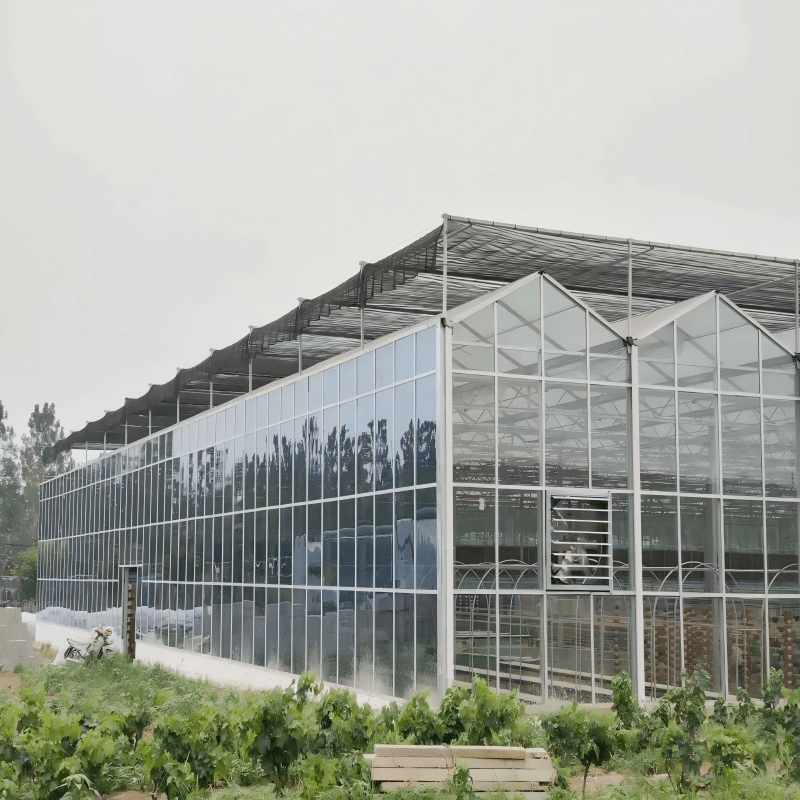
The physical envelope of the growing space dictates the financial viability of gas enrichment. Polyethylene films stretch, degrade, and leak. In contrast, properly engineered glass facilities utilize rigid aluminum alloy extrusions paired with high-quality EPDM rubber gaskets. This engineering creates a near-hermetic seal when roof vents are shuttered.
This superior retention prevents your expensive, artificially generated gas from seeping out into the neighborhood. Furthermore, carbon assimilation requires immense light energy to process. Clear tempered panels offer light transmission rates exceeding 90 percent. This high transmission pairs flawlessly with elevated carbon levels, ensuring the canopy has the abundant solar radiation required to digest the extra food.
Transitioning from theory to practice requires specific mechanical interventions. Commercial operations primarily utilize one of two methods to generate and distribute this vital resource. The choice depends heavily on local climate and existing infrastructure.
Understanding the operational differences between generation methods is critical for facility planning. Below is a breakdown of the two dominant technologies.
System Feature | Burner Generators | Liquid Bulk Tanks |
|---|---|---|
Source Material | Combusting propane or natural gas | Pressurized pure liquid carbon dioxide |
Byproducts Produced | Significant heat and moisture | Zero heat and zero moisture |
Ideal Application | Cold climates requiring winter heating | Large-scale facilities or hot climates |
Gas Purity | Risk of ethylene or carbon monoxide leaks | 100 percent pure horticultural grade |
Capital Expenditure | Lower initial equipment cost | Higher upfront infrastructure investment |
Generating the gas is only half the battle. Delivering it to the stomata is where operational finesse comes in. Because carbon dioxide is heavier than ambient air, it naturally pools near the floor if left undisturbed. Walking down the central aisle of a modern facility, you will notice horizontal airflow fans humming overhead. Micro-perforated tubing snakes beneath the plant canopy. As the pure gas gently hisses from the tubes, the fans create a continuous vortex. This mechanical airflow ensures uniform atmospheric mixing across every square meter of the crop.
Food production facilities represent the largest adopters of atmospheric manipulation. This is driven by the undeniable correlation between carbon intake and harvestable fruiting mass.
When managing a Commercial Vegetable Glass Greenhouse, pushing concentrations between 800 and 1000 parts per million triggers profound physiological responses. For vining tomatoes, consistent enrichment enhances fruit set, thickens the main stalk, and significantly increases the average weight of each individual fruit. Cucumbers exhibit explosive vegetative expansion. They produce broader leaves that capture more light, shrinking the maturation cycle. Bell peppers grown under these enriched conditions display thicker cell walls, heavier flesh, and a marked reduction in premature blossom drop.
Effective supplementation requires surgical precision. Plants only digest carbon during active photosynthesis. Dosing must strictly align with daylight hours. Standard operational protocol dictates initiating the flow of gas shortly after sunrise, once sensors detect sufficient light. Operators cut the supply about an hour before dusk. Crucially, the system must pause dosing whenever the roof vents open beyond a 15 percent threshold. This prevents the literal venting of profits into the open sky.
Advanced cultivation mediums completely rewrite how plants interact with their surroundings. When combined with atmospheric tweaking, these systems unlock unprecedented growth rates.
In a high-tech Hydroponic Glass Greenhouse, the root zone is meticulously optimized for rapid nutrient absorption. When you step on the gas pedal by flooding the air with extra carbon, the plant metabolic engine revs up dramatically. To support this hyper-accelerated cellular division, growers must proactively adjust their nutrient delivery.
The electrical conductivity of the irrigation water often needs a slight bump. This provides the extra calcium, magnesium, and potassium required by the surging canopy. If the root zone nutrition does not keep pace with the aggressive carbon intake, the crop will quickly exhibit stress signals like tip burn.
Operating a Soilless Glass Greenhouse relies entirely on the harmony of automated computers. Atmospheric sensors are hardwired directly into central fertigation brains. If sensors detect peak solar radiation and optimal gas saturation, the computer anticipates a massive surge in transpiration. It automatically triggers solenoid valves to increase irrigation frequency. This ensures water, nutrients, and carbon are delivered in perfect synchronized harmony.
The ornamental sector approaches atmospheric manipulation with a slightly different goal. Operators prioritize aesthetic perfection and post-harvest longevity over sheer edible tonnage.
Inside a Floriculture Glass Greenhouse, visual appeal dictates market grading. Flooding the environment with extra carbon leads to thicker, heavily fortified stems. These stems support massive blooms without bending or snapping. Cultivators consistently observe expansive petal development and highly saturated color profiles.
The accelerated metabolic rate compresses the vegetative phase. Commercial flower producers can turn over benches faster. Flowers cut from enriched environments also boast denser carbohydrate reserves. This translates directly to a longer, more resilient vase life for the end consumer.
Despite the overwhelming agronomic benefits, executing a flawless supplementation strategy presents distinct operational hurdles. Facility managers must navigate these daily.
The most notorious operational headache is the ventilation paradox. To keep the expensive gas inside, roof vents must remain tightly shut. Yet, on a cloudless summer day, trapped solar radiation causes internal temperatures to spike dangerously. When heat threatens the crop, automated vents must open to purge the thermal load. This instantly dumps the enriched atmosphere outdoors.
To combat this, modern operators deploy internal aluminized shade cloths. These reflect solar radiation before it heats the floor. Additionally, evaporative cooling technologies like high-pressure fogging lines drop internal temperatures by several degrees without requiring vents to open. This allows carbon dosing to continue uninterrupted.
Because the gas is invisible and odorless, structural leaks are impossible to detect with the naked eye. Poor facility maintenance directly erodes profit margins. Cultivators must routinely inspect rubber glazing gaskets, sliding door seals, and vent rack-and-pinion closures. A drafty envelope forces dosing equipment to run continuously just to hit baseline targets. This results in catastrophic financial waste.
Adopting new technology requires matching mechanical hardware to your specific architectural reality. Moving away from manual controls to predictive, closed-loop climate strategies is essential.
When selecting a system, evaluate your facility scale. Operations under one hectare in cold climates often benefit from the secondary heat provided by burner generators. Conversely, expansive multi-hectare facilities demand the purity and heat-free operation of liquid bulk tanks. Your structure type matters immensely. Venlo structures equipped with automated roof vents and intelligent climate controllers integrate perfectly with Non-Dispersive Infrared sensors. Unlike cheaper chemical sensors that suffer from calibration drift, this advanced technology provides flawless real-time data.
Automated controllers rely on these sensors to dictate exact valve releases based on real-time weather forecasts. This automation prevents under-enrichment, which leaves money on the table. It also eliminates toxic over-enrichment, which wastes resources. Removing human guesswork ensures the facility operates at peak agronomic efficiency.
Atmospheric enrichment is no longer an optional luxury. It is a fundamental requirement for modern, high-yield agriculture. It acts as the vital missing link bridging the gap between perfect lighting and flawless root zone nutrition. The structural integrity, unparalleled light transmission, and superior airtightness of a rigid-clad facility make it the ultimate vessel for maximizing physiological benefits.
If your crop yields have plateaued despite optimal watering and lighting, the invisible air around your canopy is the likely culprit. Assess your current environmental controls today. Upgrade your infrastructure to push your commercial operations to their absolute genetic limits. Explore tailored architectural structures and automated climate solutions at Jinghao to build a highly profitable, future-proof cultivation facility.
Ambient outdoor levels naturally hover around 400 parts per million. For the vast majority of commercial crops housed in a controlled environment, artificially enriching the atmosphere to between 800 and 1200 parts per million during active daylight hours yields the best physiological responses and the heaviest harvest weights.
Yes, provided it is managed by automated and calibrated sensors. While target levels up to 1500 parts per million are exceptional for accelerating plant metabolism, they remain well below the threshold that poses any danger to human health. Occupational safety standards generally cite 5000 parts per million as the upper limit for prolonged human exposure.
Costs vary drastically based on facility size and technology choice. Small-scale burner generators require a minimal upfront investment, often under a few thousand dollars. Large-scale liquid bulk tank systems require heavy infrastructure, specialized piping, and advanced sensor integration, which requires a much larger capital expenditure. However, the resulting 20 to 30 percent yield increase typically pays off the investment within 12 to 24 months.
Extreme over-enrichment, typically exceeding 2000 parts per million, can become toxic to plants. It causes stomata to close completely, halting transpiration and leading to severe leaf burn, necrotic spotting, and stunted growth. This highlights the absolute necessity of using high-quality automated sensors to regulate valve releases.
Absolutely. A hydroponic setup is widely considered the perfect environment for supplementation. Because operators have absolute granular control over the root zone, they can precisely adjust the delivery of water and dissolved minerals to perfectly match the explosive growth rates triggered by the extra atmospheric carbon.
Yes. Premium facilities are engineered with rigid aluminum framing systems, heavy-duty rubber gasketing, and solid tempered panes. This architectural rigidity drastically reduces drafts, wind-flex, and unwanted gas leakage when compared to flexible polyethylene films that degrade and stretch over time.
No. Plants solely utilize this gas to fuel the process of photosynthesis, which strictly requires active photons. Enriching the environment after the sun goes down or the grow lights turn off is a complete waste of resources. It can actively harm the crop by disrupting natural nocturnal respiration cycles.


