
Views: 0 Author: Site Editor Publish Time: 2026-08-17 Origin: Site


Selecting the right glazing material dictates the structural longevity and operational profitability of any commercial growing facility. Facility managers and investors constantly weigh upfront capital expenditure against material degradation, replacement cycles, and ongoing maintenance over a 10- to 30-year horizon. This analysis provides an objective, data-driven comparison of raw lifespan, durability, light handling, and performance degradation between glass and polycarbonate. We evaluate these materials based on functional survival rather than just structural integrity. You will learn how light transmission stability directly impacts crop yields and why factoring in environmental resilience is non-negotiable. By examining the physical realities of both materials, we guide high-stakes capital investment decisions without relying on generic assumptions. The goal is to ensure your facility maintains optimal growing conditions for decades.
Raw Lifespan: Glass offers a 25 to 40+ year functional lifespan with near-zero light transmission loss, whereas polycarbonate typically requires full replacement every 10 to 15 years due to inevitable UV degradation.
Durability Trade-offs: Polycarbonate provides superior impact resistance (up to 200x stronger than standard glass), mitigating risks in hail-prone regions, while glass is susceptible to shattering but entirely immune to scratching, yellowing, and chemical clouding.
Thermal & Operational Efficiency: Multi-wall polycarbonate delivers higher initial insulation values (R-value), lowering immediate heating costs, but glass maintains consistent Photosynthetically Active Radiation (PAR) transmission over decades, ensuring predictable crop yields.
Evaluating glazing materials requires a strict definition of longevity. Longevity is not simply a measure of when a material physically breaks or collapses. It is the duration a material successfully performs its primary agricultural function. A material that remains structurally intact but fails to transmit adequate light is functionally dead.
Structural survival refers to a material's ability to resist environmental loads without catastrophic failure. Functional survival measures how long the glazing maintains the specific light transmission and thermal properties required for crop viability. Facility planning must prioritize functional lifespan. A roof that survives a decade but blocks 15% of incoming light due to degradation forces operators to either accept lower yields or invest heavily in supplemental lighting. We measure functional lifespan by tracking the exact point where natural light levels drop below the minimum threshold for the target crop.
Photosynthetically Active Radiation (PAR), which falls between the 400 and 700 nanometer wavelengths, is the lifeblood of any controlled environment agriculture operation. PAR degradation serves as a primary metric for evaluating glazing materials. In commercial cultivation, a widely accepted horticultural rule states that a 1% drop in light transmission equates directly to a 1% drop in crop yield. Maintaining absolute light transmission stability over decades is paramount for consistent production forecasting. Glazing materials that degrade, yellow, or cloud over time introduce an unpredictable variable into yield calculations. For example, a tomato operation experiencing a 5% light reduction over five years will see a compounding loss in fruit weight and quality, directly impacting the bottom line.
Commercial facility planning requires rigorous adherence to local building codes regarding wind load, snow load, and seismic activity. The glazing material directly influences the engineering of the underlying structure. Heavy materials require robust, rigid framing to prevent deflection. Lightweight materials allow for wider purlin spacing but may suffer from wind uplift or flutter. The chosen glazing must integrate with a structural frame capable of withstanding local environmental extremes while maintaining the integrity of the weather seals. A structure engineered for a 120 mph wind load and a 40 lbs/sq ft snow load will require vastly different steel profiles depending on whether the roof is clad in heavy glass or lightweight plastic.
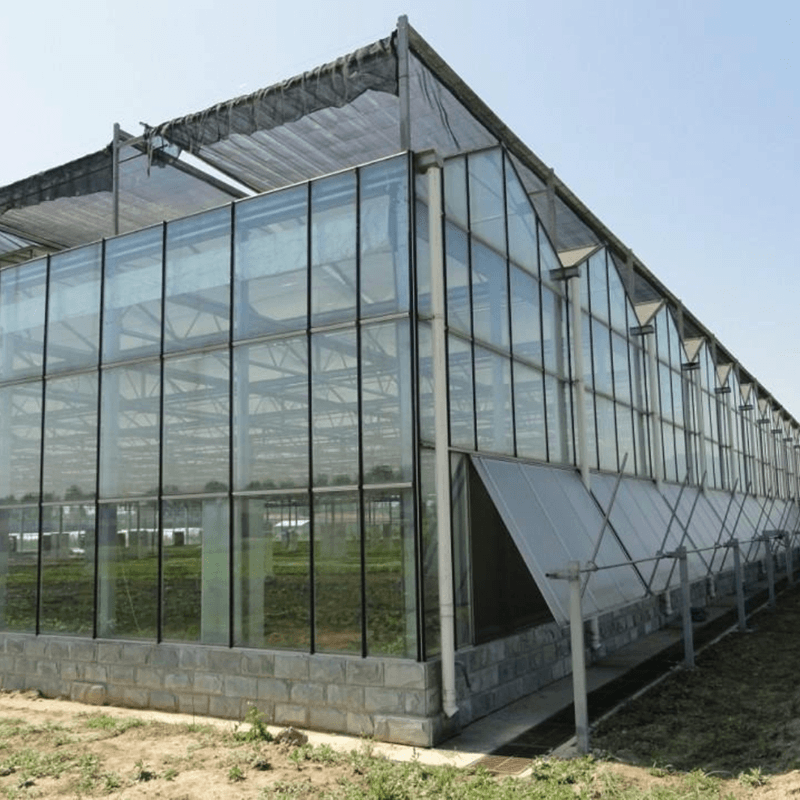
Horticultural glass remains the gold standard for permanent agricultural structures. The material properties of glass offer distinct advantages for operations prioritizing multi-generational longevity and absolute light stability. Modern facilities utilize various glass types, including annealed, tempered, and diffused variations, each engineered for specific light-handling characteristics.
A well-maintained glass greenhouse offers a functional lifespan of 25 to 40 years, often exceeding half a century. The most significant advantage of glass is its degradation curve, which is essentially flat. Glass does not suffer from UV degradation. It does not undergo photo-oxidation. The light transmission you measure on the day of installation is the exact same light transmission you will measure three decades later. This static performance ensures predictable, reliable PAR levels for the entire lifecycle of the facility.
High-wire crops such as tomatoes, cucumbers, and peppers demand massive amounts of daily light. In a commercial vegetable glass greenhouse, the permanent light transmission stability of glass directly impacts long-term production. These crops thrive under consistent Daily Light Integrals (DLI). The inability of glass to yellow or cloud ensures that the lower canopy of high-wire crops receives adequate light penetration year after year, maximizing fruit development and overall harvest weight. Many modern facilities also utilize diffused glass with specific haze factors (ranging from 20% to 70%) to scatter light deep into the plant canopy, further boosting yields.
While the glass panels themselves last indefinitely, achieving a 40-year lifespan requires proactive maintenance of the supporting components. The rubber gaskets, glazing seals, and aluminum or steel framing are the actual failure points in a glass structure. UV exposure and thermal expansion eventually degrade rubber seals, leading to air leaks and water infiltration.
To maintain peak performance, facility managers must execute the following maintenance protocols:
Inspect all EPDM rubber gaskets annually for signs of dry rot or shrinkage.
Re-torque aluminum glazing bar fasteners every five years to account for thermal expansion and contraction.
Clean the glass panels bi-annually using automated roof washers to remove dust and industrial pollutants.
Check the foundation perimeter for settling, which can cause structural racking and subsequent glass breakage.
Replace all primary weather seals at the 15-year mark to prevent water infiltration and maintain thermal efficiency.
Glass is exceptionally heavy, typically weighing around 2.5 pounds per square foot. Supporting this dead load requires heavy-duty aluminum or galvanized steel framing. The foundation requirements are substantially more rigorous than those for lightweight plastics. The framing must be engineered to eliminate deflection under wind and snow loads; any significant bending in the frame will cause the rigid glass panes to shatter. This heavy infrastructure represents a significant upfront commitment to long-term stability and structural permanence.
Polycarbonate is a high-performance thermoplastic polymer widely used in agricultural construction. It is typically extruded into twin-wall or multi-wall configurations. Twin-wall panels offer a balance between light transmission and insulation, while multi-wall panels prioritize maximum thermal insulation at the expense of light transmission. Understanding the chemical realities of this material is necessary for accurate lifespan planning.
The standard functional lifespan of polycarbonate is 10 to 15 years. Unlike glass, polycarbonate is highly susceptible to UV degradation. Constant exposure to ultraviolet radiation causes photo-oxidation, breaking down the polymer chains. This chemical process manifests physically as yellowing and micro-cracking across the surface of the panels. As the material yellows, it absorbs and reflects light rather than transmitting it, resulting in a steady, unavoidable loss of PAR transmission over time.
Polycarbonate excels in environments prone to severe weather. It boasts extreme impact resistance, rating up to 200 times stronger than standard annealed glass. This makes it the preferred choice in regions with frequent, heavy hail. Additionally, the fluted design of multi-wall polycarbonate traps air, delivering superior initial insulation values (R-value). This structural characteristic significantly reduces heat loss during cold winter nights, lowering immediate energy demands for the facility.
Operational realities reveal several vulnerabilities inherent to polycarbonate. The material is relatively soft and highly susceptible to scratching during routine cleaning. Abrasive brushes or harsh chemicals will permanently mar the surface, further reducing light transmission. Furthermore, the hollow flutes of multi-wall panels are prone to internal condensation. If the flutes are not perfectly sealed with specialized venting tape, moisture accumulates, creating an ideal breeding ground for algae. Algae growth inside the panels is nearly impossible to remove and drastically cuts light transmission. Polycarbonate also has a high thermal expansion coefficient. It expands and contracts significantly with temperature changes, requiring specialized aluminum extrusion profiles with deep glazing pockets to prevent the panels from popping out during winter freezes or summer heatwaves.
Comparing these materials requires analyzing how their physical properties translate into operational outcomes over a multi-decade timeline. The choice between glass and polycarbonate influences everything from daily plant health to future facility expansion.
The 20-year light transmission curve tells the definitive story of these two materials. Glass presents a flat curve; its light transmission remains constant from year one to year twenty. Polycarbonate presents a declining curve. Even with high-quality UV co-extrusion coatings, polycarbonate typically loses 1% to 2% of its light transmission annually after the initial warranty period. Over a decade, a 10% reduction in light transmission directly correlates to a cumulative reduction in crop yield, fundamentally altering the productivity of the facility.
Glazing Material | Functional Lifespan | Light Transmission Stability | Impact Resistance | Insulation (R-Value) |
|---|---|---|---|---|
Horticultural Glass | 25 - 40+ Years | Excellent (Zero UV Degradation) | Low (Unless Tempered) | Low (Single Pane) |
Twin-Wall Polycarbonate | 10 - 15 Years | Declining (Yellows over time) | Very High | Medium |
Multi-Wall Polycarbonate | 10 - 15 Years | Declining (Yellows over time) | Very High | High |
Materials handle incoming solar radiation differently. Standard clear glass transmits direct light. While this maximizes PAR, it can create harsh shadows and hot spots, often requiring the deployment of shade curtains or the use of more expensive diffused glass to prevent canopy scorching. Conversely, the fluted structure of twin-wall and multi-wall polycarbonate naturally diffuses incoming light. This scatters the light evenly across the canopy, penetrating deeper into the plant structure. Polycarbonate also blocks nearly 100% of harmful UV rays, offering built-in plant protection without additional coatings.
Facility expansion highlights a major difference between the materials. When expanding a glass multi-span greenhouse, new glass integrates seamlessly with the old. The light transmission in the new addition will match the original structure perfectly. Expanding a polycarbonate facility is complex. Matching brand-new, crystal-clear polycarbonate panels to older, yellowed panels creates distinct microclimates within the same facility. The older sections will receive significantly less light than the new sections, complicating irrigation, nutrient delivery, and harvest timing across the operation.
Risk management and compliance heavily favor glass. Glass is a non-combustible material. It will not burn, melt, or contribute to the spread of a fire. This non-combustibility simplifies fire code compliance and often results in more favorable commercial insurance premiums. Polycarbonate is a petroleum-based thermoplastic. While modern agricultural polycarbonate is treated with fire retardants to make it self-extinguishing, it will still melt and warp under extreme heat, presenting different challenges during fire safety inspections for a commercial glass greenhouse versus a plastic-clad structure.
Evaluating the financial viability of glazing materials requires looking beyond the initial purchase order. Facility operators must model the financial impact of material degradation, replacement labor, and energy consumption over a 30-year operational horizon.
Glass requires a higher initial capital expenditure due to the cost of the material and the heavy-duty steel framing required to support it. However, this is a one-time structural investment. Polycarbonate requires less initial capital, but the panels must be completely replaced two to three times over a 30-year period. Each replacement cycle incurs costs for new materials, specialized labor, disposal of the old plastic, and significant operational downtime. The labor process of replacing polycarbonate is intensive. Crews must remove the aluminum caps, pull the old panels, spend hours manually cleaning old butyl tape or silicone off the extrusions, apply new sealant, set the new panels, and re-secure the caps. When modeling a multi-decade facility, the recurring replacement cycles of polycarbonate often surpass the initial structural investment required for glass.
Polycarbonate provides better initial insulation, which lowers heating demands during the first few years of operation. The trapped air within multi-wall panels acts as a thermal barrier against cold outside temperatures. However, as the polycarbonate yellows and loses light transmission, operators often must install and run supplemental LED lighting to maintain crop yields. The electrical costs of running supplemental lighting to compensate for degraded plastic can quickly erase the heating savings gained from the material's insulation properties. Glass maintains a consistent energy profile, allowing operators to rely on automated thermal screens to manage heat loss without sacrificing natural light.
Glazing degradation directly affects crop revenue. A permanent reduction in light transmission lowers the maximum yield potential of the facility. The permanent clarity of glass acts as a revenue-protecting asset. By ensuring that the crop receives the maximum available natural light every day for decades, operators can forecast yields with high accuracy and avoid the revenue dips associated with aging plastic glazing.
No glazing material is perfect. Successful deployment requires anticipating the inherent weaknesses of the chosen material and implementing engineering strategies to mitigate those specific risks during the construction phase.
The primary risk of glass is catastrophic shattering due to hail or severe impact. Standard annealed glass breaks into large, dangerous shards. To mitigate this, modern facilities utilize fully tempered safety glass for the roof. Tempered glass is four to five times stronger than annealed glass and shatters into small, blunt cubes upon impact, protecting workers and crops below. Additionally, specialized aluminum glazing bars with deep channels and heavy-duty EPDM rubber gaskets are used to absorb structural vibrations and prevent the glass from cracking under wind load.
Polycarbonate installations fail prematurely when moisture management is ignored. To extend the functional lifespan, panels must feature a factory-applied anti-condensate coating on the interior surface. This forces condensation to sheet down the panel rather than forming droplets that block light and drip onto crops. More importantly, the flutes must be sealed correctly. Installers must use solid aluminum tape on the top edge to block water entry and specialized breathable venting tape on the bottom edge to allow internal condensation to escape while blocking insects and dust.
Many operations consider starting with polycarbonate to reduce initial capital requirements, planning to retrofit to glass later. This strategy carries severe structural risks. Framing designed exclusively for lightweight polycarbonate is rarely engineered to support the massive dead load of glass. If a future retrofit is anticipated, the initial steel framing, purlin spacing, and concrete foundation must be over-engineered to glass specifications from day one. Failing to do so means the entire structure must be torn down and rebuilt when transitioning to glass.
Conduct a localized climate risk assessment to evaluate historical hail frequency versus maximum snow and wind loads before selecting a glazing material.
Consult with a structural engineer to determine the exact foundation and steel framing requirements necessary to support the weight of a permanent glass structure.
Specify fully tempered safety glass for all roof applications to mitigate shatter risks and ensure compliance with worker safety regulations.
Require factory-applied anti-condensate coatings and strict flute-sealing protocols if installing multi-wall polycarbonate to prevent premature algae contamination.
A: A commercial glass greenhouse offers a functional lifespan of 25 to 40+ years. The glass itself does not degrade from UV exposure. However, the supporting infrastructure, specifically the rubber glazing seals and gaskets, typically requires maintenance or replacement every 10 to 15 years to prevent leaks and maintain structural integrity.
A: Yes. Polycarbonate is susceptible to UV degradation. Constant exposure to the sun causes photo-oxidation, leading to visible yellowing and micro-cracking within 10 to 15 years. This yellowing significantly reduces the amount of Photosynthetically Active Radiation (PAR) that reaches the crops.
A: Polycarbonate is vastly superior for hail-prone areas due to its extreme impact resistance, absorbing blunt force without shattering. For high-wind areas, both materials perform well if the underlying structural frame is engineered correctly, though glass requires heavier, more rigid framing to prevent deflection.
A: Initially, yes. Single-pane glass has a lower R-value than multi-wall polycarbonate, meaning it loses heat faster. However, commercial glass facilities mitigate this by installing automated internal thermal screens, which deploy at night to trap heat and drastically reduce winter energy consumption.
A: Standard clear glass transmits direct light, which maximizes intensity but can cause shadows and canopy scorching. Multi-wall polycarbonate naturally diffuses light due to its fluted structure, scattering it evenly across the plants. Polycarbonate also blocks nearly all harmful UV radiation naturally.
A: Depending on the quality of the factory-applied UV co-extrusion coating, polycarbonate typically loses between 1% and 10% of its initial light transmission over a 10-year period. This degradation accelerates rapidly once the UV protective layer breaks down.
A: Rarely without major structural modifications. Greenhouses engineered specifically for lightweight polycarbonate usually lack the heavy-duty framing and robust foundations required to support the massive weight of glass. A retrofit requires planning and over-engineering the steel frame during the initial build.


